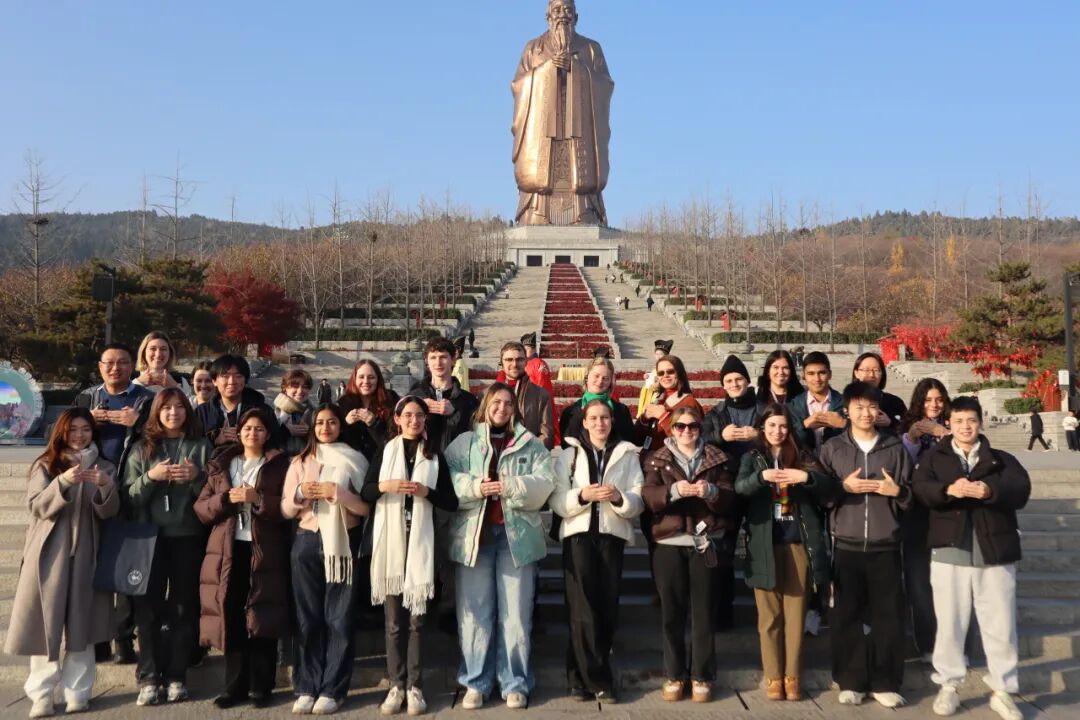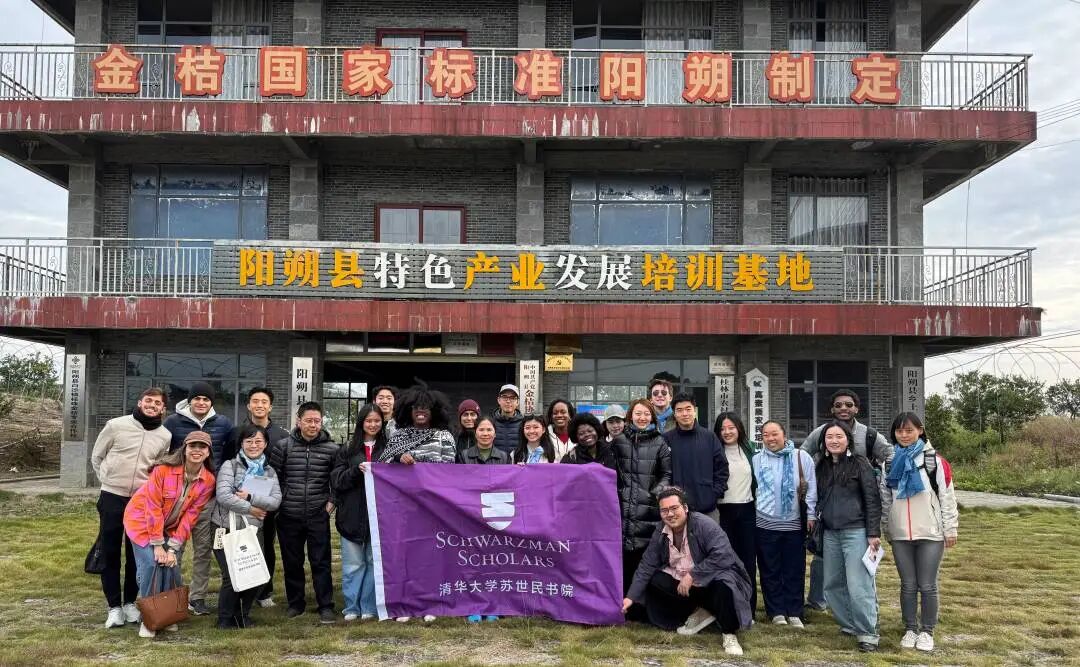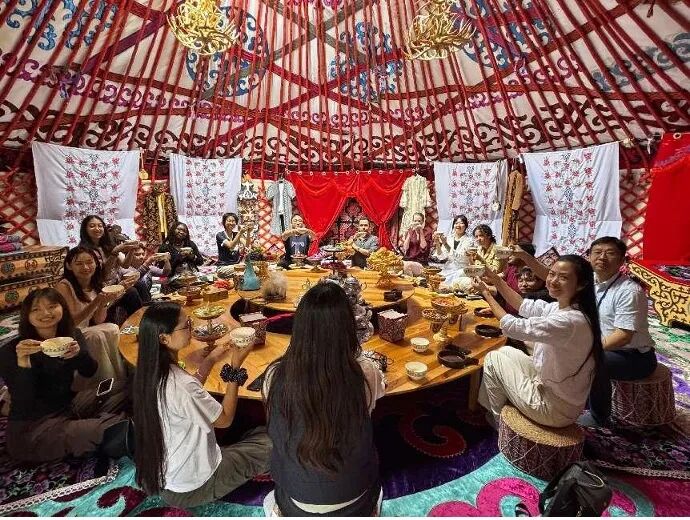
From August 4 to 10, 2025, the International Student and Scholars Center of Tsinghua University organized more than 20 international students from more than 10 countries, including the United States, France, Russia, Pakistan, and Malaysia, to carry out a week-long cultural practice and visit to the Xinjiang Uygur Autonomous Region.
With the theme of "Understanding Contemporary China and Perceiving and Opening Up Xinjiang", this event went deep into many places in southern Xinjiang and the Ili River Valley, personally experienced the real picture of the integration and symbiosis of multi-ethnic cultures, and visited the achievements of rural revitalization and ecological protection. At the 10,000-mu high-efficiency water-saving training base in Nurbagh Township, Shaya County, the students walked into the cotton planting base to learn about Xinjiang's innovation and practice in efficient water-saving irrigation technology, and felt the great potential of science and technology to empower the development of modern agriculture.
The international students of the delegation walked into Tianlai Jiayi Village, Xinhe County, known as the "hometown of national musical instruments", which opened a window for students to understand the traditional music culture of the Uyghur people, listen to the live performances of intangible cultural heritage inheritors and explain the production process and musical characteristics of traditional musical instruments. The students experienced the musical instrument making process with their own hands, felt that "music transcends language and becomes a bridge between us and local culture", and deeply understand the profound heritage and inheritance spirit of Uyghur music culture.
In the Kurdning Nature Reserve, the "most beautiful forest in the Tianshan Mountains", students hiked in the primeval forest, appreciated the original style of the natural ecology of the West Tianshan Mountains, and learned about the local practical achievements in the integrated development of biodiversity conservation and ecotourism. That night, everyone stayed in a Kazakh felt house, experienced nomadic life customs, and sang and danced with local herders around the bonfire. A Russian student sighed, "Their enthusiasm is as vast as a grassland, which makes me experience true hospitality and tolerance." ”
In addition, the study group also visited many historical and cultural landmarks such as the ruins of Subashi Buddhist Temple, the Kuqa Palace, Kucha Alley, and Ili Liuxing Street, from the coexistence of multiple religions, the remains of the ancient Silk Road, to the urban life of contemporary multi-ethnic settlements, and fully perceived Xinjiang's profound historical accumulation, rich cultural outlook and modern development vitality.
Through this trip, international students not only deepened their understanding of the cultural and ecological protection of western China, but also enhanced cross-cultural exchanges and international perspectives. Many international students believe that this trip to Xinjiang not only expanded their understanding of China's multiculturalism, but also truly felt the natural expression of the sense of community of the Chinese nation in daily life. "This trip completely changed my understanding of Xinjiang. It is not only a geographical concept, but also a vivid practice of civilizational integration, ecological harmony and people-friendliness. ”
This event is an important practice of Tsinghua University to promote international students' deep perception of contemporary China and promote cultural exchanges between Chinese and foreign youth. Through personal experience and face-to-face communication, the students realized a real, three-dimensional and open Xinjiang, and will also pass on what they have seen, heard, thought and felt here to more people, and become young messengers of cultural exchanges and friendship.