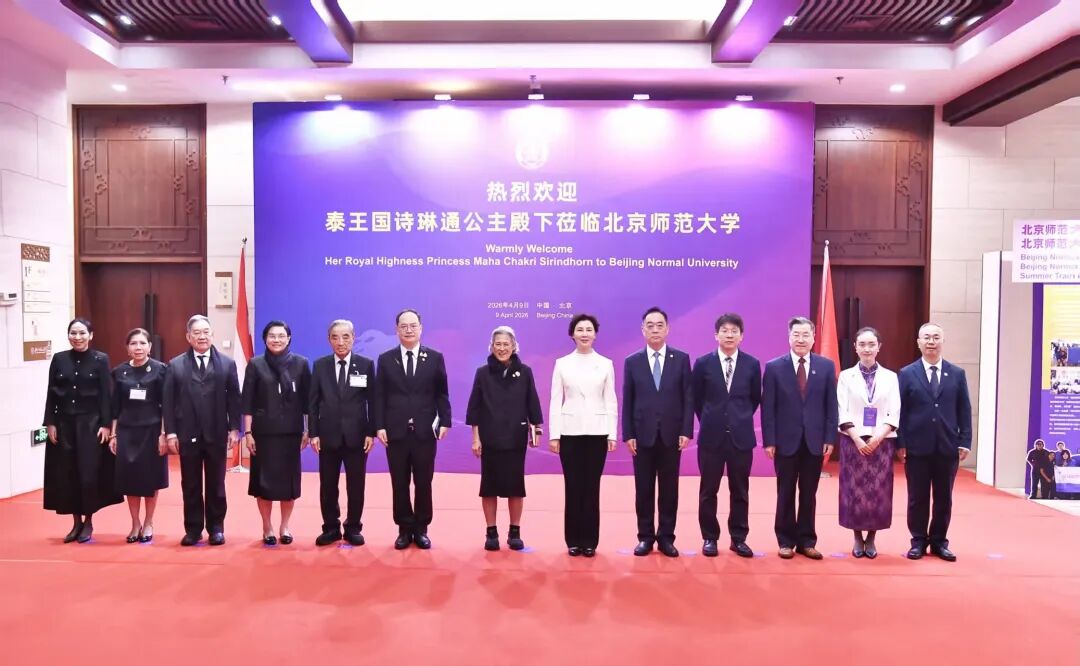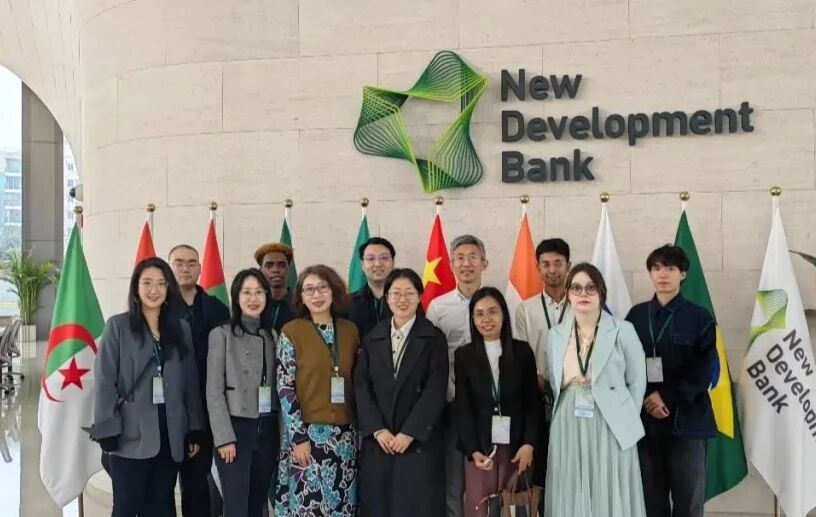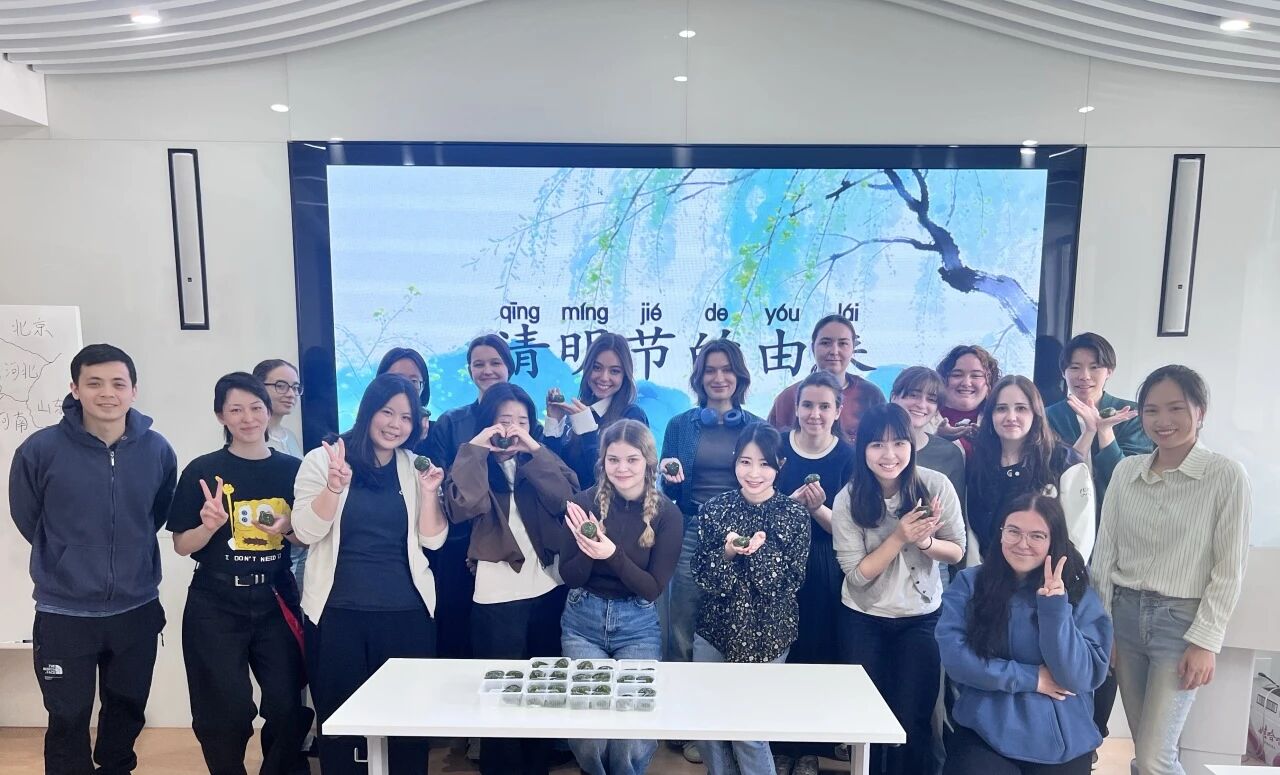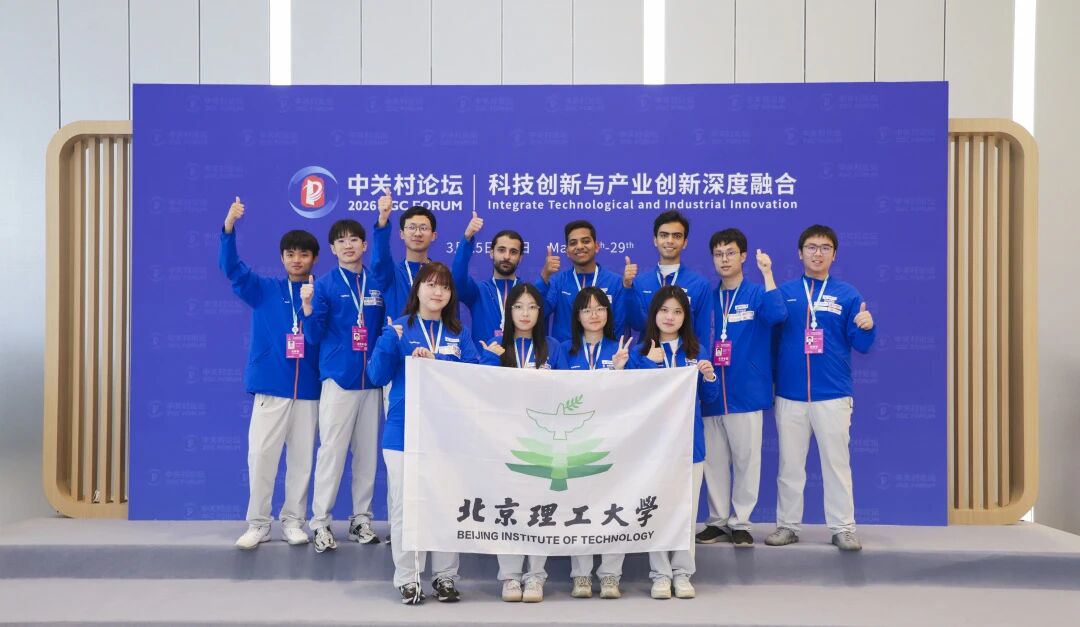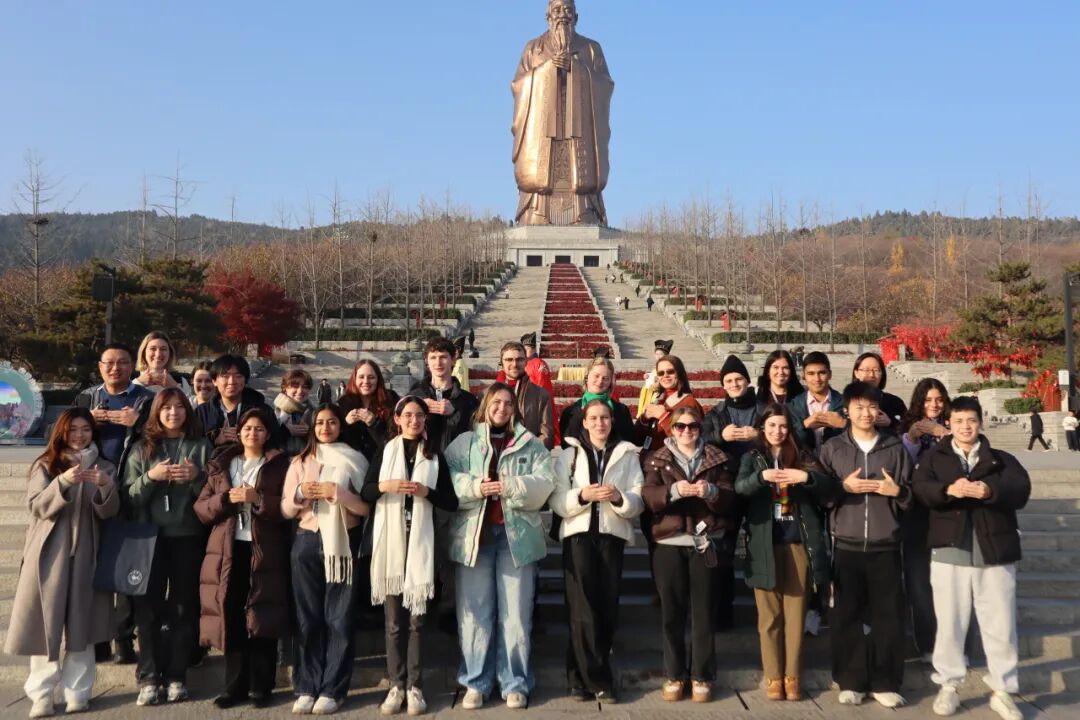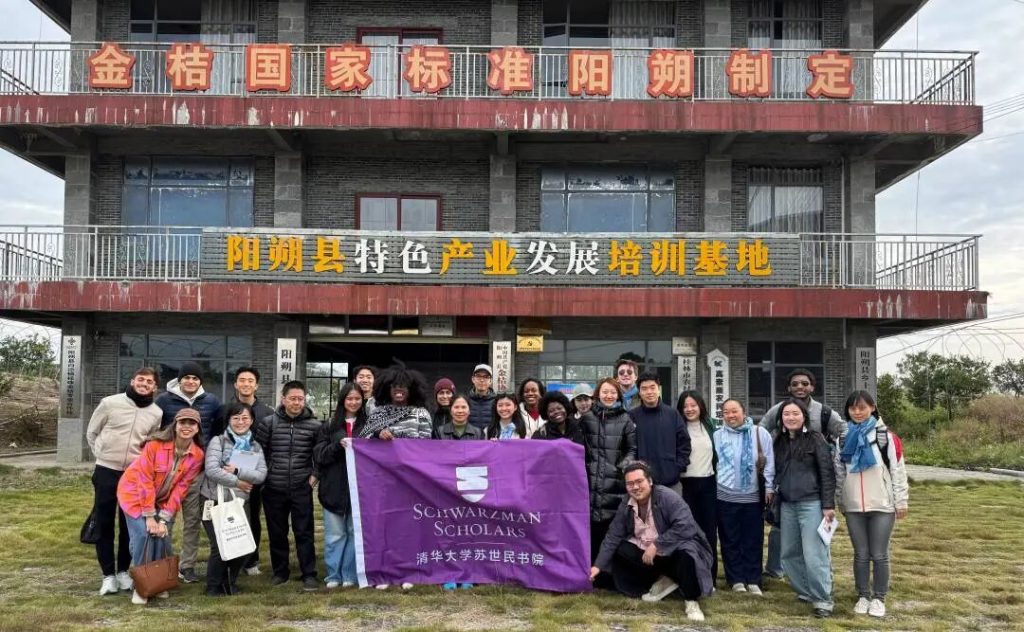
From November 16 to 22, faculty and students of Schwarzman College at Tsinghua University traveled to Guizhou, Fujian, Yunnan, Sichuan, Zhejiang, Ningxia, Jiangsu, Guangxi, and Chongqing to conduct a social survey of China. The scholars delved into schools, enterprises, communities, and villages, systematically experiencing the rich practices of China's economic and social development through on-site visits, thematic research, and cross-cultural exchanges.
Guizhou: Engaging in Grassroots Education to Understand the "People" and "Culture" of Rural Revitalization
The Guizhou trip was centered on educational observation. Faculty and students of the college gained in-depth understanding of the history of local schools and experience in education-for-poverty-alleviation. They held discussions with volunteers, participated in pre-class training, and entered classrooms to interact with students. At the Blind School, they built deep connections with students through music experiences. The scholars also visited Digital Town and Mengdong Technology to learn about the successful experience of local university-enterprise cooperation and the development of Guizhou's digital industry. They joined the Buyi ethnic group's long-table banquet, sports interactions, and the "Hundred Birds River Night" cultural gala to experience the diversity and vitality of rural culture.
Fujian: The Development Path from the "Maritime Silk Road" to the "Jinjiang Experience"
The Fujian research started with regional economy and private enterprise development. In Quanzhou, the starting point of the Maritime Silk Road, faculty and students gained in-depth understanding of its thousand-year trade tradition and historical background of multicultural integration through discussions with local government agencies, digital industry alliances, and cultural and economic exchange centers. They also developed a systematic understanding of the formation of Fujian's modern industrial pattern and the path of regional reform and development. During visits to leading private enterprises such as Anta, Hengan, Qipai, and Baichuan, they intuitively observed the transformation and upgrading path of Fujian's manufacturing industry, and deeply understood how the "Jinjiang Experience" promotes the growth of private economy and the rise of regional industries through the positive interaction between government and market. The trip also included visits to Boss Soft, Fuzhou University, the Asia-Pacific Research Center of Fujian Academy of Social Sciences, and a trip to Guling to learn about the history of Sino-foreign exchanges on-site, further deepening their understanding of Maritime Silk Road culture and the tradition of openness.
Yunnan Pu'er: Observing New Drivers of Rural Industry Through Tea and Coffee
The Yunnan research, themed "Pu'er Tea and Coffee: Aromas Encountering the World", focused on rural industrial transformation. The scholars first visited the ancient tea forests in Jingmai Mountain to explore the protection and management mechanisms of the tea forests, and personally experienced the tea-frying process. Then, they communicated with young coffee entrepreneurs in Pu'er, participated in experiential coffee teaching, and observed the entrepreneurial ecosystem of the local coffee industrial chain. The research also extended to Mojiang Confucian Temple, the Tropic of Cancer Marker Park, and Yi ethnic villages to understand the integration of ethnic culture and cultural tourism, as well as to visit the practice of rural revitalization and industrial transformation in Lianzhu Town and demonstration parks.
Chengdu, Sichuan: Collaborating with Universities to Understand Youth Leadership and Urban Innovation Through Dialogue
The core of the Chengdu trip was cross-university exchanges with the University of Electronic Science and Technology of China (UESTC). The two sides jointly held the "Leader Talk" youth dialogue forum. Students from both universities formed teams to study relevant government work reports, conduct on-site visits and reflections on four topics—urban residents' lives, high-tech zone construction, international community management, characteristic cultural tourism, and urban activation—and finally produced research reports to explore new ideas for urban development. Faculty, students, academic guests, and enterprise representatives from both universities held in-depth discussions on the core connotations of global leadership and practical scenarios in the AI era. From multicultural inclusivity, human-machine collaboration to empathy in cross-cultural communication, they built a bridge for youth exchanges through ideological collisions. The faculty and students also visited enterprises such as Sitime and VeriSilicon, participated in nature education experiences at Wolong Giant Panda Base, and deepened their understanding of the urban innovation ecosystem through cross-cultural youth dialogues.
Ningbo, Zhejiang: Entering a Port City to Understand Marine Economy and Manufacturing Upgrading
The Ningbo research adopted a dual perspective of marine economy and manufacturing. Faculty and students of the college learned about the city's development context through lectures and discussions with the Human Resources and Social Security Bureau. They also visited enterprises such as Tianbao Hardware, Shuanglu Battery, Kangsaini, and Soundking Group to observe industrial upgrading. Visits to the China Port Museum, Underwater Archaeology Center, and Ningbo-Zhoushan Port helped the scholars understand port construction and the inheritance of marine culture. Through discussions with young entrepreneurs from Beilun and Yinzhou districts in Ningbo, they further recognized Ningbo's open pattern and industrial vitality.
Ningxia: Understanding Regional Development Models Through East-West Collaboration and Green Governance
At Ningxia University, teachers and students studied the local history and culture, listened to experts introduce ecological civilization construction, and embarked on field explorations of western China's new energy development and regional governance. During the investigation, the teachers and students visited Shared Group, Chalco Yinxing Energy, Windey Wind Power, Qingtongxia Hydropower Station, National Energy Photovoltaic Base, and New Hope Xiajin Dairy, etc. They went deep into the frontline of production, communicated on-site with enterprise leaders and technicians, and jointly discussed the path of coordinated development that adapts to local conditions to promote energy development and ecological protection. On the edge of the Tengger Desert, an expert who has stuck to the frontline of wind prevention and sand control for 35 years told the story behind the "desert miracle", allowing teachers and students to personally feel the hardships and effects of green development. In Yulong Village, Minning Town, teachers and students had in-depth discussions with the village party secretary stationed there, learning about the local development experience and grassroots work practices. Especially unforgettable was the exchange between the students and high school students from Zhongning No.1 Middle School. As "elder brothers and sisters", they shared their learning experiences, helped them solve problems, and encouraged young students to bravely pursue their dreams. This practice allowed everyone to deeply understand the meaning of "unity of knowledge and action" and also injected new thinking into the path of sustainable development in western China.
In Wuxi, Jiangsu, experience the power of "intelligent manufacturing" in digital cities and advanced manufacturing industries
Focusing on digital governance and empowering industries with data, teachers and students visited Wuxi City’s Urban Operation Center, Data Bureau, and Data Group, learning about the city’s digital management system and exploring the possibilities for future urban development and management directions. During the discussion with Tsinghua Wuxi Institute of Applied Sciences and the Supercomputing Center, everyone learned about the mechanism for converting university research results into enterprise products. Visiting the high-tech zone exhibition hall and communicating with private and state-owned enterprises such as AstraZeneca Commercial Innovation Center, Longxin Technology, and Xingcheng Special Steel gave the scholars a more three-dimensional understanding of biomedicine, digital energy management, and the digital upgrading of traditional industries. Finally, they experienced Wuxi’s exploration of cultural and industrial integration through research on lake view cultural tourism.
In Guilin, Guangxi, experience the modern transformation of a landscape city through cultural heritage and sustainable practices The research in Guilin was carried out along two main lines: sustainable development and Guilin’s urban positioning as a "transportation hub and connecting space from ancient times to the present". Teachers and students observed the concept of ecological cities at the Shiru Sustainable Development Garden and participated in the rehearsal of a university drama club to experience youth cultural expression. Visits to the Flying Tigers Relic Park, Yangshuo Agricultural Demonstration Zone, and Lingqu Canal helped scholars understand the inheritance of historical memory, the practice of rural revitalization, and the exploration of cultural and tourism integration. Research and learning at As Technology, Feiyu Technology, and Liyuan Yimi Kitchen allowed teachers and students to have a more concrete and in-depth understanding of Guilin’s industrial characteristics and development momentum. During this trip, the teachers and students also visited Guilin University of Aerospace Technology, personally experiencing the inheritance and innovation of the aerospace spirit.
In Chongqing, experience rural revitalization, urban governance, and mutual learning of civilizations on-site in the mountain city
The research in Chongqing covered three dimensions: rural areas, cities, and international cooperation. Teachers and students held discussions with local government in Pengshui County, visited international cooperation sites for rural revitalization, and exchanged grassroots governance experiences with villagers in Miao villages. In Dongliu Village, Baojia Town, they further understood the logic of rural construction through household visits and courtyard meetings. Subsequent urban research included the Urban Construction Planning Museum, Stilwell Museum, International Logistics Center, and Renhe Street, allowing everyone to further understand urban planning and construction, urban grassroots management experience, and the history of cultural exchanges between China and foreign countries. At the same time, the scholars participated in Sino-foreign cultural exchange activities and sports events at Luneng Bashu Middle School, and held special seminars with experts and scholars at Sichuan International Studies University on rural revitalization, social governance, and mutual learning of civilizations.
Through in-depth visits, this China social survey allowed Schwarzman Scholars to understand China’s regional differences and governance experience in real practical contexts, and also deepened their understanding of society and culture through cross-cultural exchanges. The "walking classroom" allowed scholars to construct a more three-dimensional picture of China through observation, reflection, and dialogue. In the future, Schwarzman College will continue to leverage its cross-cultural education advantages to promote global youth to enhance understanding through exchanges and mutual learning, seek cooperation in common challenges, and continuously expand their public communication capabilities to the world and global governance perspectives in the process of deeply understanding Chinese stories.
Tsinghua University Schwarzman College
It is a college under Tsinghua University, abbreviated as Schwarzman College. On April 21, 2013, the "Tsinghua University Schwarzman Scholars Program" was jointly initiated by Tsinghua University and Stephen A. Schwarzman, co-founder of Blackstone Group, and officially launched as the world’s first scholarship program established to address the geopolitical situation of the 21st century was officially launched , it was formally established in October 2015. As of July 2025, the college has had nine graduating classes, with over 1,200 alumni distributed in more than 100 countries and regions around the world . The current dean is Xue Lan .
The College offers a Master's Degree Program in Global Leadership. The curriculum is structured around three core modules: Global Affairs, China Development, and Leadership, with a focus on public policy, international relations, economics, and business. It adopts teaching methods including group discussion classes and joint instruction by Chinese and foreign professors. The admission criteria require applicants to be between 18 and 28 years old, with an English proficiency level of at least IELTS 7, TOEFL 100, or Cambridge English 185. The global admission ratio is 20% from China (including Hong Kong, Macau, and Taiwan), 40% from the United States, and 40% from other countries and regions. The program was established with a $100 million personal donation from Stephen Schwarzman and additional fundraising, totaling $275 million; the fundraising target has been increased to $350 million.