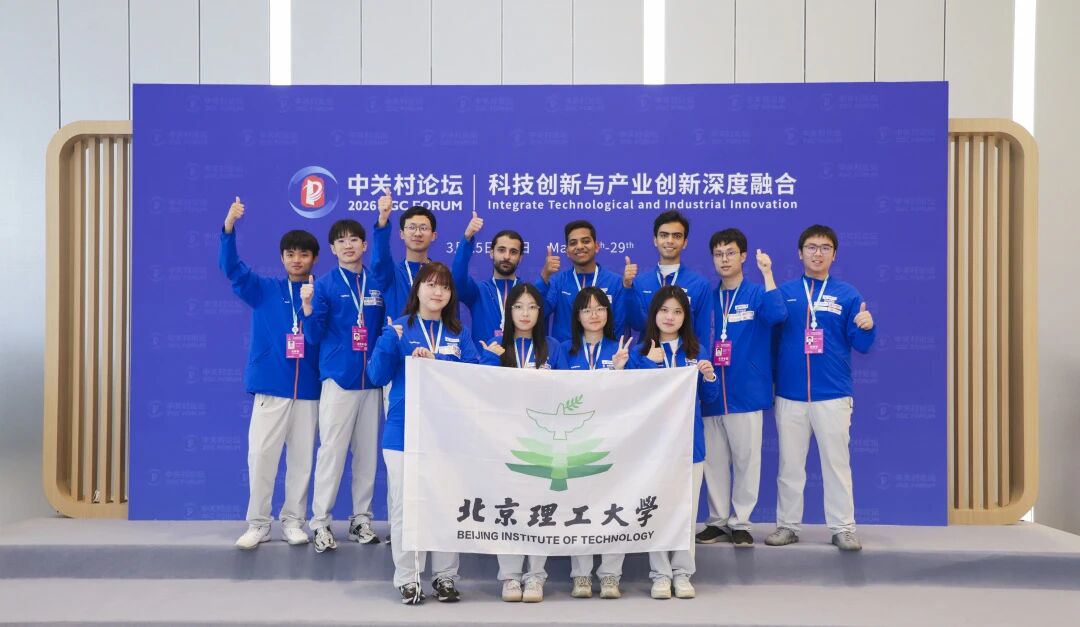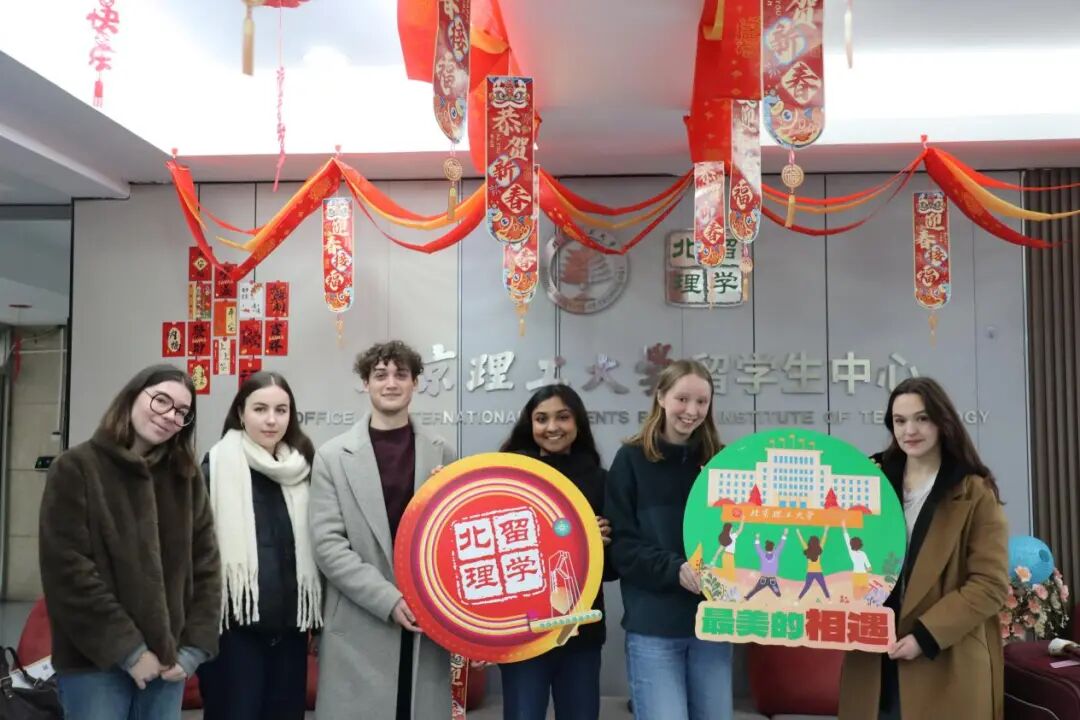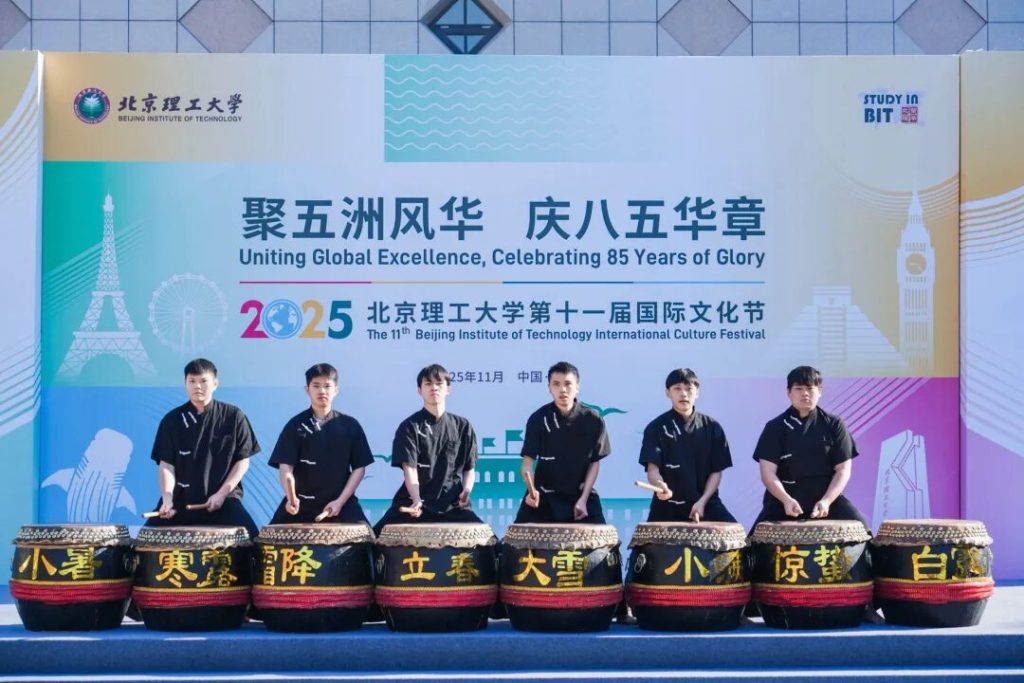
On November 22, 2025, the 11th International Cultural Festival of Beijing Institute of Technology (BIT) grandly opened. Coinciding with the 85th anniversary of BIT’s founding, this cultural feast deeply intertwined the customs of the five continents with the glory of the anniversary through brilliant performances and a dazzling array of themed booths, vividly interpreting BIT’s school motto "Virtue to Enlighten, Knowledge to Refine" and its educational philosophy of "Openness, Inclusiveness, and Global Connection". Li Bing, Director of BIT’s New Campus Construction Management Office; Zhang Dong, Director of the Asset and Laboratory Management Department; Peng Shu, Deputy Director of the International Exchange and Cooperation Office; and Zhang Wei, Vice Dean of Xu Teli College, among others, attended the event.
At the opening ceremony, Ming Daofu, Deputy Director of BIT’s International Students Center, delivered a speech. He noted that over the past 85 years since its founding, BIT has always resonated with the nation’s development, achieving brilliance in talent cultivation, cutting-edge technology, and other fields, while deeply engaging in international exchanges and mutual learning with an open and inclusive attitude. Today, BIT ranks among the top echelon of "Double First-Class" universities and has entered a new stage of high-quality, connotative development. The theme of this year’s International Cultural Festival, "Gather the Splendor of the Five Continents, Celebrate the 85th Chapter," aims to use culture as a bond, integrate youthful wisdom, and build a stage for multi-cultural exchanges and mutual learning. It is hoped that Chinese and foreign youth will enhance understanding through communication, grow together through mutual learning, and strive to become new-era talents with international vision and global literacy.
In the performance segment, students from various countries jointly presented a cross-border artistic carnival. The opening seasonal drums kicked off the event with majestic beats, instantly igniting the atmosphere. Following this, the Peking Opera excerpts "Mu Guiying Takes Command" and "Distant Acacia" fully showcased the unique charm of traditional Chinese opera.
Indonesian song and dance, Russian song and dance, and Pakistani song and dance took the stage in turn. The gentle Burmese dance and the light, agile Vietnamese dance were also performed, bringing the customs of different countries to the stage. Moroccan song and dance told stories of North Africa; dances from Pacific island nations outlined the romance and mystery of the islands; and dances from El Salvador and Nicaragua showcased the cultural individuality of the Americas. Students from the Zhuhai Campus, who traveled a long distance, presented "Liang Zhu" (Butterfly Lovers) with violin accompaniment and dancing. The melodious violin music told the thousand-year-old love story, while four international students danced gracefully in traditional Chinese costumes, creating a cross-cultural romantic scene that blended Chinese and Western elements. Every move of the African dance performers burst with the primitive vitality and passion of life. The ingenious "Bell Rhythm Diabolo" performance and the powerful and heroic lion dance "Lion Breaking Through the Formation • Treading Peaks and Playing with the Pearl" drew thunderous applause from the audience.
In the bustling exhibition area, 45 themed booths formed a "World Cultural Map" that condensed the customs of over 40 countries across the five continents. It attracted many Chinese and foreign teachers and students to stop and experience, with long queues forming in front of each booth.
Laotian coffee and Ethiopian coffee each had their own unique flavors; the barbecue from Pacific island nations and desserts from Southeast Asia filled the air with fragrance; and the booths of Saudi Arabia and Spain became the most popular photo spots. Students at the Chinese booth offered experiential activities such as water transfer printing for silk scarves and sachet making, while the crispy and sweet Bing Tang Hulu (Candied Hawthorn on a Stick) was especially popular. The exquisite silver jewelry from Algeria and the characteristic handmade carpets from Morocco conveyed a sense of primitive vitality. The McDonald’s and KFC items displayed at the U.S. booth drew knowing smiles from the crowd.
International students from various countries, dressed in traditional costumes, acted as cultural ambassadors, enthusiastically sharing stories of their hometowns through food, handicrafts, and small games. Through tasting, experiencing, and communicating, Chinese and foreign students broke down cultural boundaries, allowing the customs of the five continents to blend on BIT’s campus. This wrote a vivid chapter of exchange for the International Cultural Festival and also highlighted the school’s open and inclusive international education atmosphere.
In addition, the popular "BIT Passport" check-in activity continued to gain popularity. Teachers, students, alumni, faculty family members, and residents from surrounding communities shuttled between booths, collecting exclusive stamps while chatting cordially with international students about their study experiences and cultural stories. Amid the dual enjoyment of taste and sight, seeds of friendship sprouted quietly.
This grand event was not only a cultural carnival but also a vivid demonstration of BIT’s open education philosophy. In the future, the school will continue to cultivate the fertile soil for international talent development, focus on promoting the integration and mutual learning of diverse cultures, invigorate civilizational dialogue, inject strong momentum into the construction of a world-class university, and strive to write a new chapter of high-quality development.
Beijing Institute of Technology (Beijing Institute of Technology, abbreviated as BIT)
Commonly abbreviated as BIT, located in Beijing and affiliated with the Ministry of Industry and Information Technology, it is a national key university built in successive batches and a centrally administered university. It ranks among the first batch of national universities for the "211 Project", "985 Project", Class A of the "World-Class Universities" initiative, and "Double First-Class" initiative universities. It has been selected for the National Excellent Engineers Education and Training Program, the "2011 Collaborative Innovation Center", the Higher Education Discipline Innovation and Talent Introduction Program, the National Program for Sending Postgraduates to Build High-Level Universities, and the National College Students' Innovation and Entrepreneurship Training Program.
The predecessor of the university was the Yan'an Natural Science College founded in 1940, which was the first specialized institution in the history of the Communist Party of China to conduct natural science teaching and research. In January 1946, Yan'an Natural Science College was renamed the Industrial Specialized School of the Shanxi-Chahar-Hebei Border Region and moved around North China for education. In October 1948, the Industrial Specialized School of the Shanxi-Chahar-Hebei Border Region merged with the School of Engineering of North China University to form the School of Engineering of North China University. On November 18, 1951, the Ministry of Education of the Central People's Government renamed the School of Engineering of North China University to Beijing Institute of Technology. On April 2, 1988, Beijing Institute of Technology was renamed Beijing Institute of Technology.