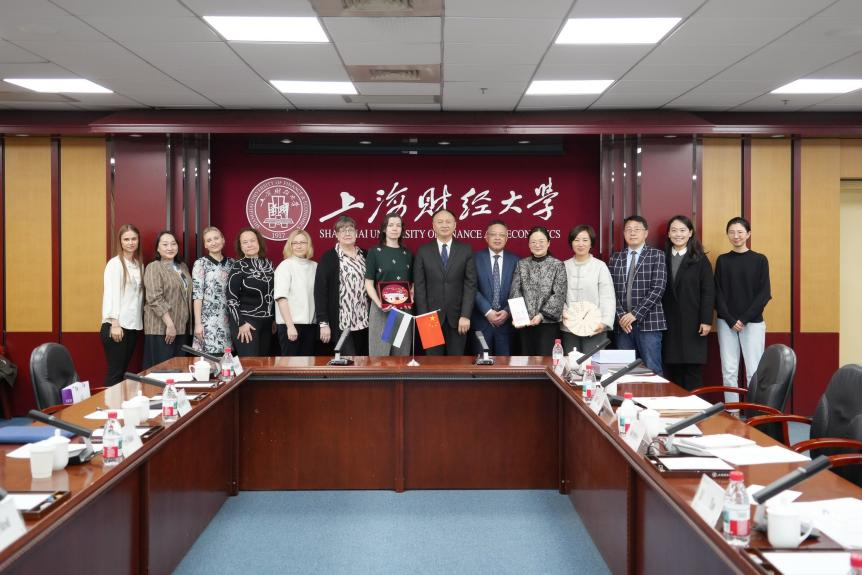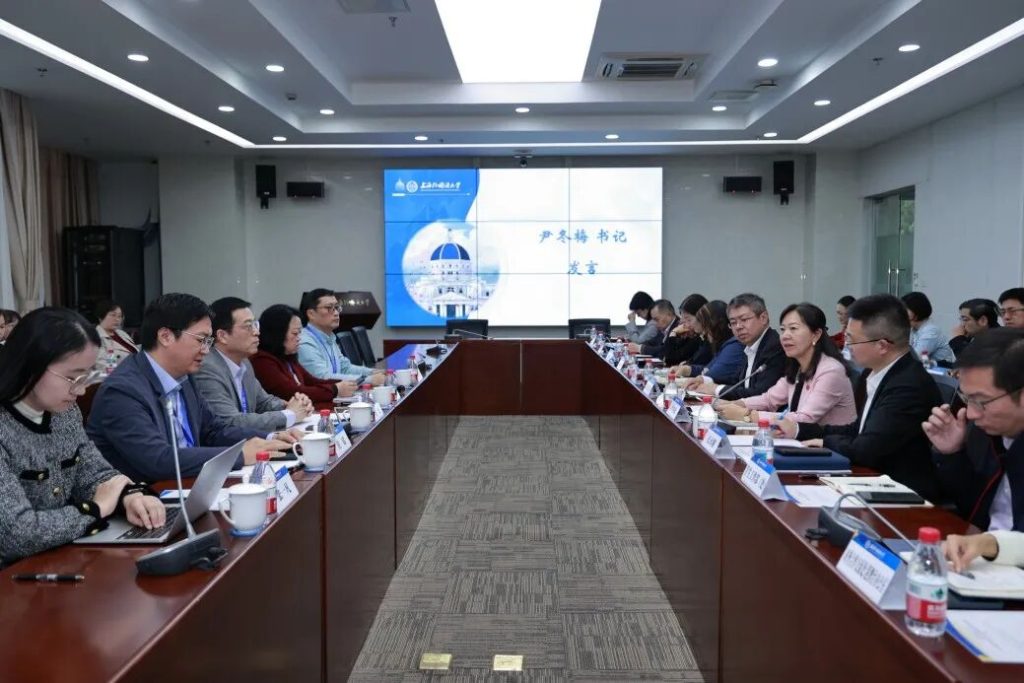
Recently, Zong Wa, former Deputy Secretary-General of the China Education Association for International Exchange (CEAIE), led a certification expert group to conduct an on-site review for the re-certification of the quality of international student education at Shanghai International Studies University (SISU). University leaders including Yin Dongmei, Secretary of the Party Committee, Li Yansong, President, and Yi Yonggang, Vice President, attended the meeting.
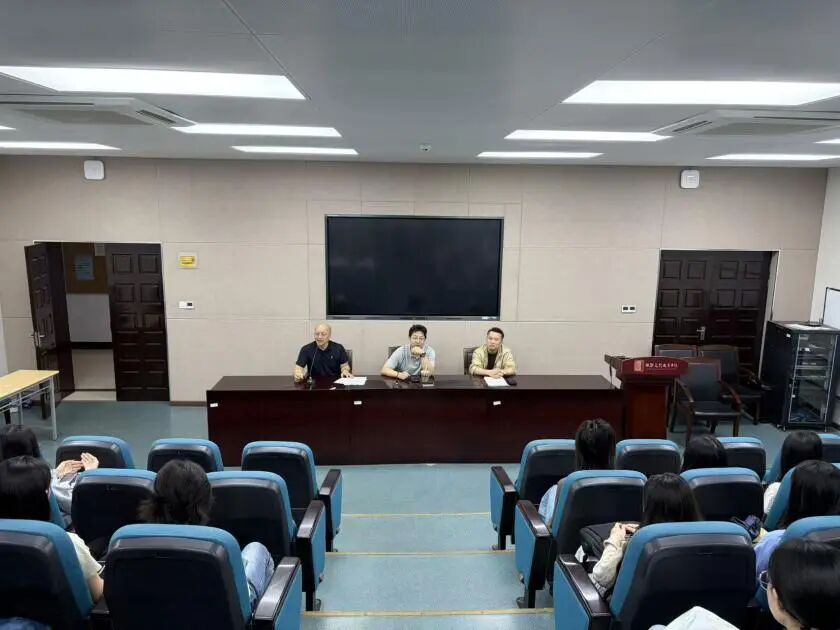
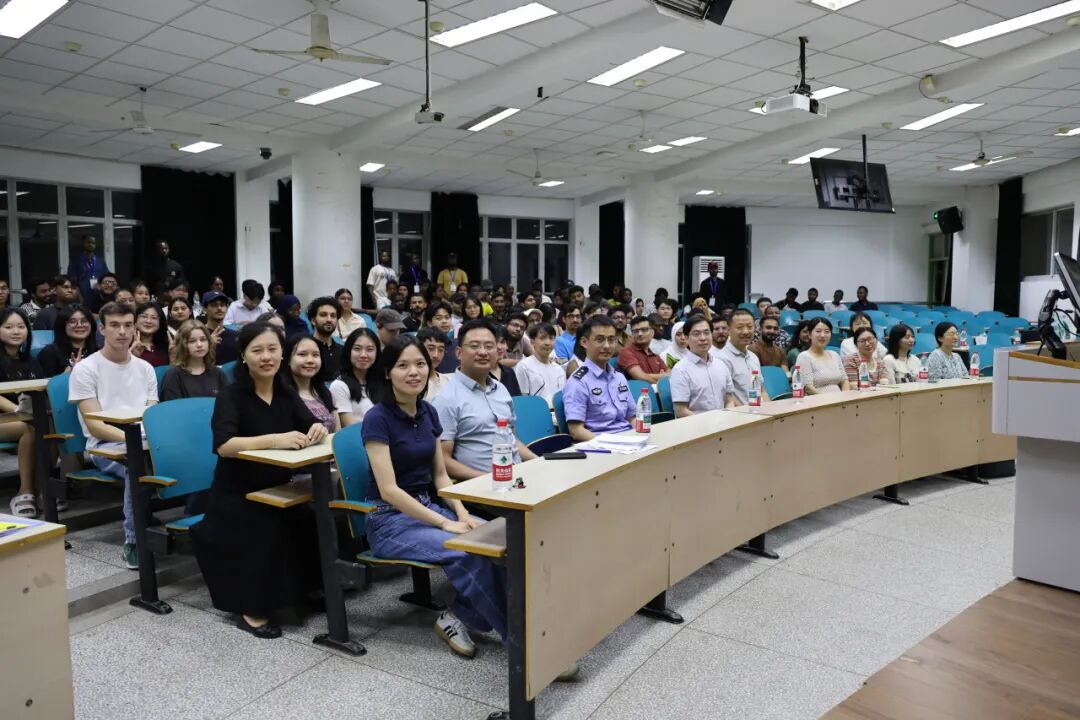
On the morning of November 6, the briefing session for the on-site review of the quality re-certification for international students studying in China was held in the British Hall of the Conference Center at the Hongkou Campus. Participants included Zong Wa, former Deputy Secretary-General of CEAIE; Shen Jie, leader of the certification expert group and former Dean of the International Education College of Zhejiang University; expert group members Zuo Bin, Dean of the Department of Psychology at Sun Yat-sen University; Pu Ruoxi, Dean of the School of Foreign Languages at Jinan University; Du Peiyuan, Vice Dean of the International College at University of International Business and Economics; Zhang Yifan, Project Officer of the Cross-Border Education Quality Assurance Department of CEAIE; Li Yansong, Yi Yonggang, heads of major functional departments of the university, heads of teaching units, and representatives of international students. Yi Yonggang presided over the meeting.
Li Yansong extended a warm welcome to the leaders of CEAIE and the certification experts on behalf of the university. He pointed out that the quality re-certification for international students studying in China coincides with a critical period for the university to fully implement the spirit of the 4th Plenary Session of the 20th Communist Party of China (CPC) Central Committee, summarize the 14th Five-Year Plan, and scientifically plan the 15th Five-Year Plan. It is not only a comprehensive review of the previous stage of international student education work but also a valuable opportunity to promote high-quality development in the future. The university attaches great importance to this certification work. Adhering to the principle of "promoting construction through evaluation, promoting reform through evaluation, promoting management through evaluation, combining evaluation with construction, and focusing on construction," the university has comprehensively carried out self-evaluation and self-improvement work, systematically sorting out the achievements and shortcomings of its education.
Zong Wa elaborated on the basic situation and important significance of the quality re-certification for international students studying in China, and fully affirmed the achievements of the university in international student education. Shen Jie recognized the university's sufficient preparations for the re-certification, detailed the specific content of the on-site review work, and further clarified the relevant work requirements.
Subsequently, the certification expert group conducted a comprehensive assessment of the quality of the university's international student education through on-site inspections, interviews with teachers and students, document reviews, and classroom observations. Shen Jie, on behalf of the expert group, gave preliminary feedback, highly praising the characteristics and highlights of the university's international student education work, fully acknowledging the fruitful results achieved in the training and management of international students, while sincerely pointing out existing shortcomings and indicating directions for improvement.
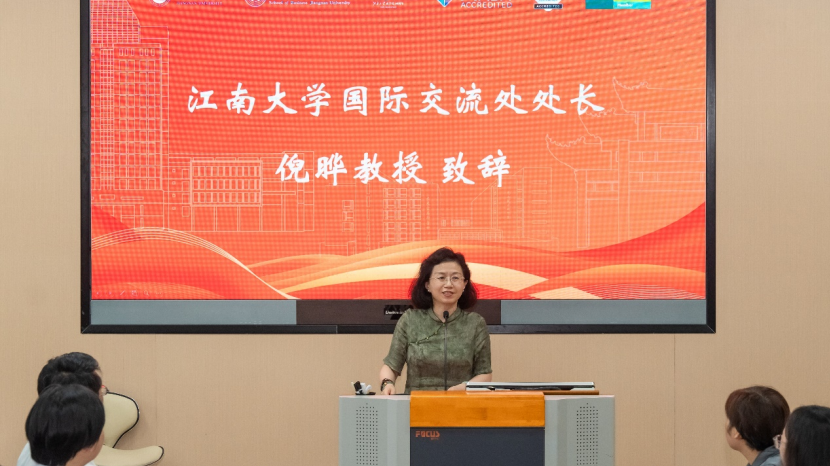
Yin Dongmei delivered a statement, expressing gratitude for the hard work and careful guidance of the certification expert group. She stated that the university will promote the connotative high-quality development of international student education with higher standards, more practical measures, and better mechanisms. By further improving the governance system, strengthening condition guarantees, deepening teaching reforms, enhancing service levels, and creating a globally influential brand for international student education, the university will contribute more SISU strength to building a strong education country, promoting mutual learning between Chinese and foreign civilizations, and building a community with a shared future for mankind.
Shanghai International Studies University (Shanghai International Studies University, SISU)
Also known as "SISU" for short, it is the first higher education institution of foreign languages established after the founding of the People's Republic of China, a state-run full-time regular higher education institution, a national key university directly under the Ministry of Education and co-built with Shanghai. Its administrative authority is the Ministry of Education of the People's Republic of China, and its registered address is 550 Dalian West Road, Shanghai. SISU is a signatory to the UN Memorandum of Understanding and a partner of the Directorate-General for Interpretation of the European Commission. It is also a member of the International Federation of Translators' Schools (CIUTI). The university has offered all language pairs of the six official languages of the United Nations and has obtained the highest global rating from the International Association of Conference Interpreters (AIIC). Distinguished masters such as Jiang Chunfang, Li Linsi, Xia Zhongyi, Fang Zhong, and Xu Zhongnian have all taught at SISU.
SISU traces its origins to the Shanghai Russian School attached to the East China People's Revolutionary University, founded in December 1949. In 1950, it was renamed the Foreign Language Specialized School attached to the East China People's Revolutionary University; in 1952, it became the Shanghai Russian College; in 1956, it was renamed Shanghai Foreign Language Institute; in 1963, it was listed as a national key higher education institution; in 1994, it was renamed Shanghai International Studies University. In 1996, it was designated as a key construction university under China's "211 Project"; in 2017, it was selected as a "Double First-Class" construction university in China.