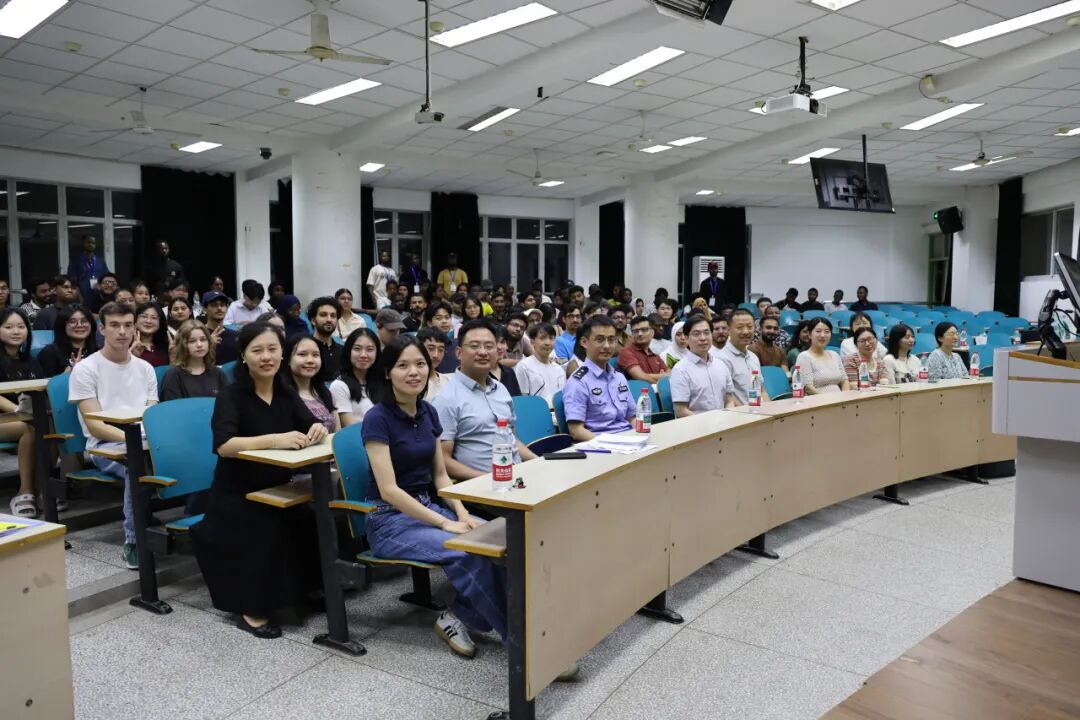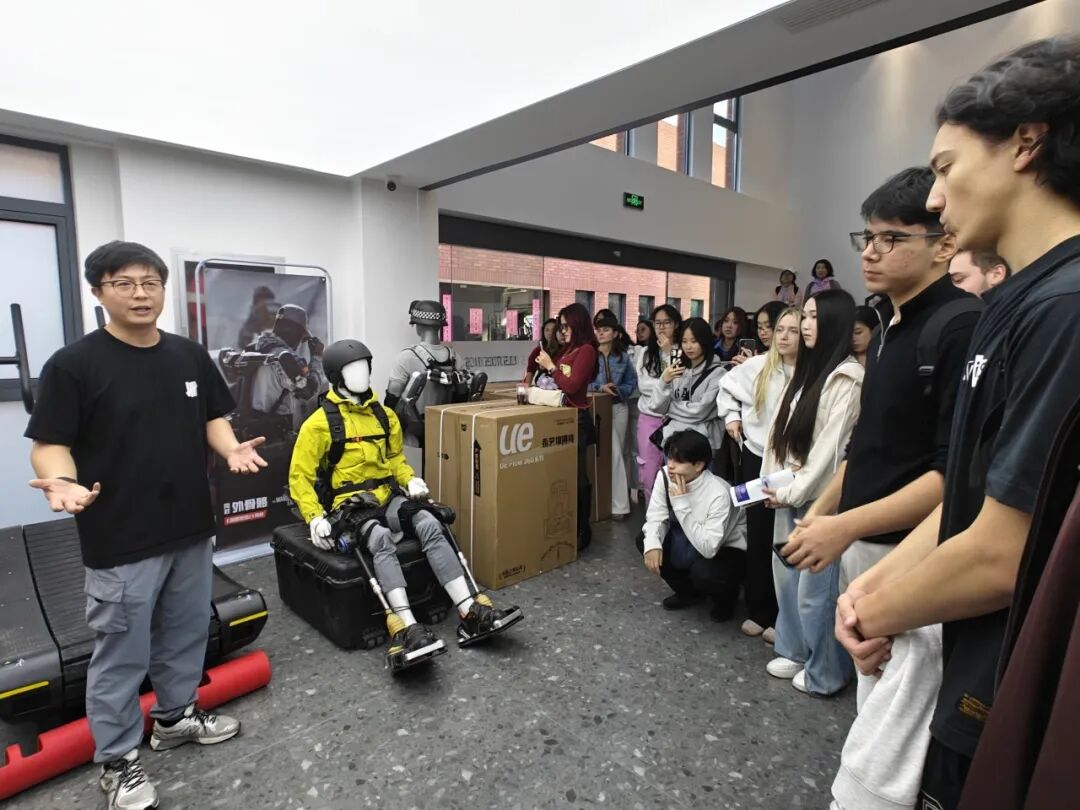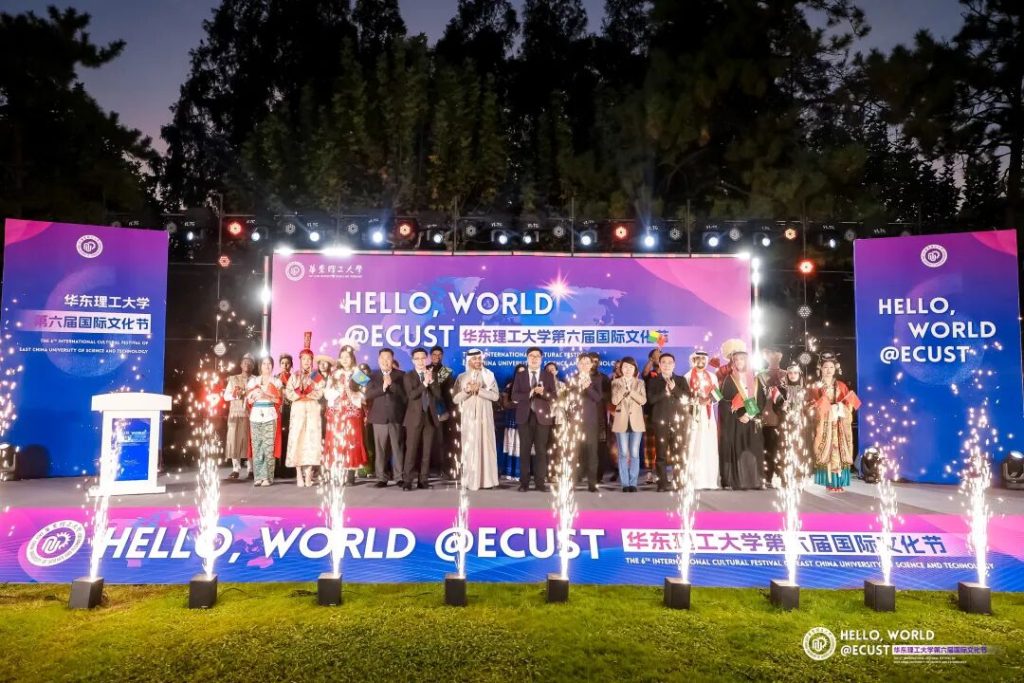
On November 10, the 6th International Cultural Festival of East China University of Science and Technology was held on the lawn of Xuhui Campus. With the theme of "Hello, World @ECUST", the event attracted more than 1,000 teachers, students and community residents, bringing a campus event of multicultural exchange.
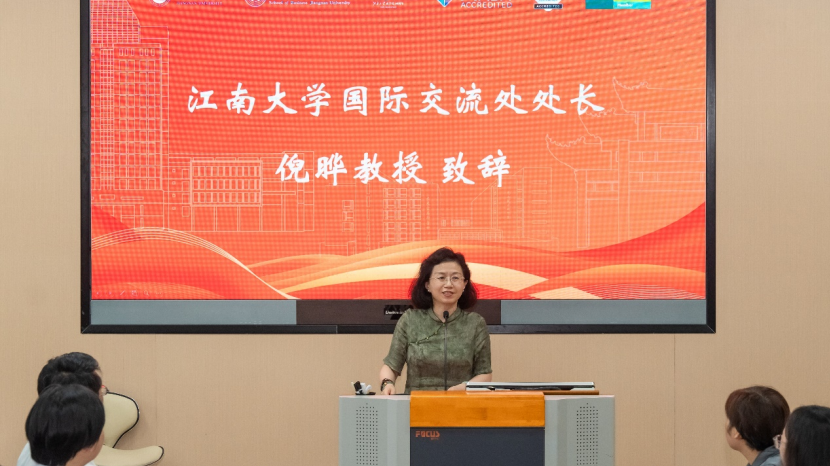
Shen Haitao, Deputy Secretary of the Party Committee of East China University of Science and Technology, and His Excellency Muhanad Naqbi, Consul General of the United Arab Emirates in Shanghai, attended and delivered speeches. Zhu Jiamin, President of Shanghai Meilong Branch of Bank of China Co., Ltd., Jiang Qinting, General Manager of East China Regional Company of Shenzhen Urban Investment Group, Cui Shanshan, Director of the Student Affairs Department of the Party Committee, Li Xiaopeng, Dean of the School of International Education, and Wei Xing, Secretary of the Youth League Committee, attended the opening ceremony of the International Cultural Festival.
Shen Haitao pointed out in his speech that in recent years, the university has continued to deepen its international education strategy, has established stable cooperative relations with more than 170 universities and scientific research institutions around the world, and established a new ecology of studying abroad in Huali with "one business card and three pillars", and the scale of international students in our school has continued to expand. International students make Huali Campus a fertile ground for the intersection of diverse civilizations and the blooming of youthful dreams. He encouraged Chinese and foreign students to work together as messengers of culture and bridges of friendship, and to make due contributions to a community with a shared future for mankind.
His Excellency Mohanad Naqbi, Consul General of the United Arab Emirates in Shanghai, was present as a special guest. He pointed out that China and Arab countries have people-to-people ties and cultural integration, and a total of 37 UAE students are currently studying at East China University of Science and Technology, and Huali has become the largest Chinese university accepting UAE students. This is not only a proof of the solid development of educational cooperation between the two sides, but also a reflection of China-Arab friendship at the level of youth exchanges.
The UAE Ayala dance performance team, which traveled thousands of miles to China to participate in the 8th CIIE, also made a special trip to visit the Huali campus, bringing a performance with national characteristics to everyone, which became a highlighted highlight of the whole event.
The ensuing international theatrical performances were wonderful, with various program formats, including elegant Chinese folk dance, heroic Mongolian songs and dances, graceful Thai dances, vibrant Malaysian song skewers and enthusiastic Pakistani dances, which won bursts of applause from the audience.
The core part of this cultural festival is the cultural booths covering 22 countries. Students from all over the world demonstrated their unique regional culture in a variety of forms: traditional cuisine, national costumes, musical instruments, crafts, etc. Teachers, students and residents inside and outside the school lingered in front of the booths, from Saudi Arabia's "Haina" hand-painted to Sierra Leone's dried fruits, from Yemen's vanilla to Malaysian coconut milk sandwiches, from Brazilian photography to Mongolia's deer bone dice, these national booths provided the experience of seeing the world without leaving home.
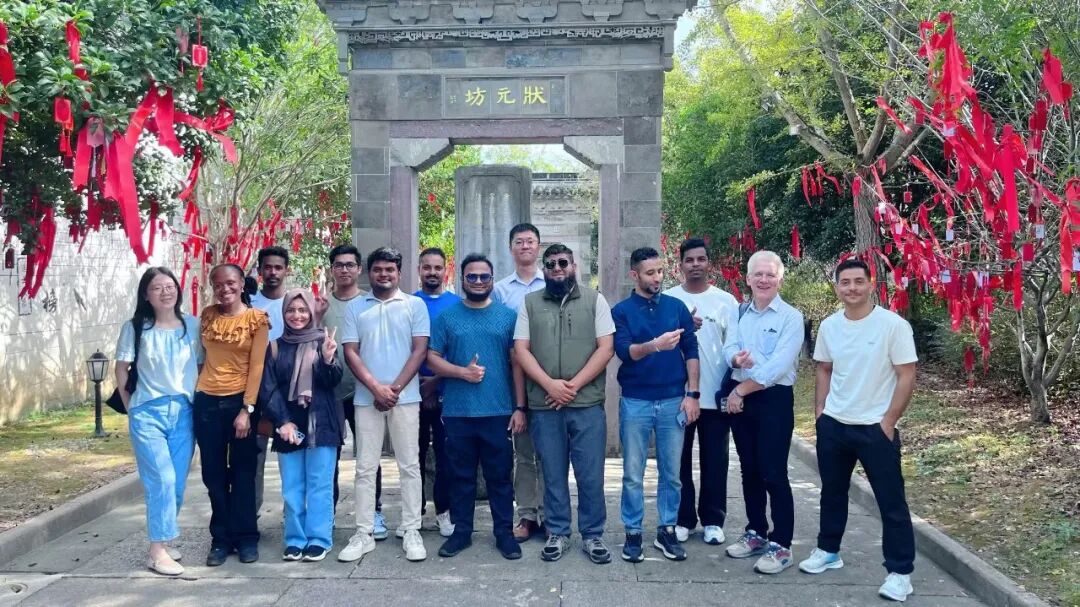
The charm of culture shines more and more in the interaction. At the event site, Chinese students visited the booths of various countries, their eyes full of novelty, and they expressed admiration from time to time, deeply feeling the diverse vitality of campus culture. International students took the initiative to introduce and warmly invite, using food and handicrafts as a bridge of communication. Shaking hands, taking group photos, and communicating sentences again and again converge into a warm current of friendly interaction. This event is far more than a show, but also a connection - it allows Chinese students to embrace the world at their doorstep, international students to gain belonging in a foreign country, and jointly compose a campus movement of mutual learning and everlasting friendship.
East China University of Science and Technology
ECUST, located in Shanghai, is a national key university directly under the Ministry of Education of the People's Republic of China, a national "211 Project" key construction university, a national "double first-class" construction university, and was selected as the "111 Plan", the Excellent Engineer Education and Training Program, and the first batch of pilot units for the construction of specialized national technology transfer institutions in universities.
East China University of Science and Technology, formerly known as East China Institute of Chemical Technology, was established in 1952 by the merger of the chemical engineering departments of Jiaotong University, Aurora University, Datong University, Soochow University, Jiangnan University and other universities. In 1956, it was designated as one of the first schools in the country to recruit graduate students, and in 1960, it was identified as a national key university directly under the Ministry of Education by the Central Committee of the Communist Party of China. In 1981, doctoral students were recruited for the first time. In 1993, with the approval of the State Education Commission, it was renamed East China University of Science and Technology. In 1995, it was signed by the State Education Commission and Sinopec Corporation for joint construction. In 1996, it entered the ranks of the national "211 Project" key construction. In 1997, it was signed by the State Education Commission and the Shanghai Municipal People's Government for joint construction. In 2000, it was approved by the Ministry of Education to establish a graduate school, and in 2008, it was approved to build the "985 Project Advantageous Discipline Innovation Platform". In 2017, it was selected as the first batch of "double first-class" construction universities in the country.