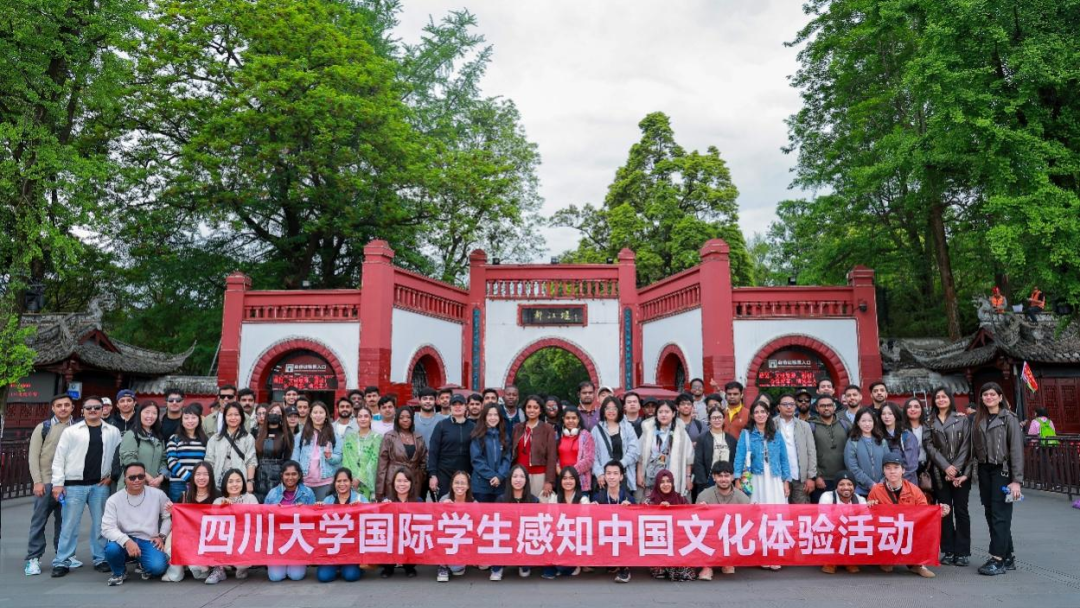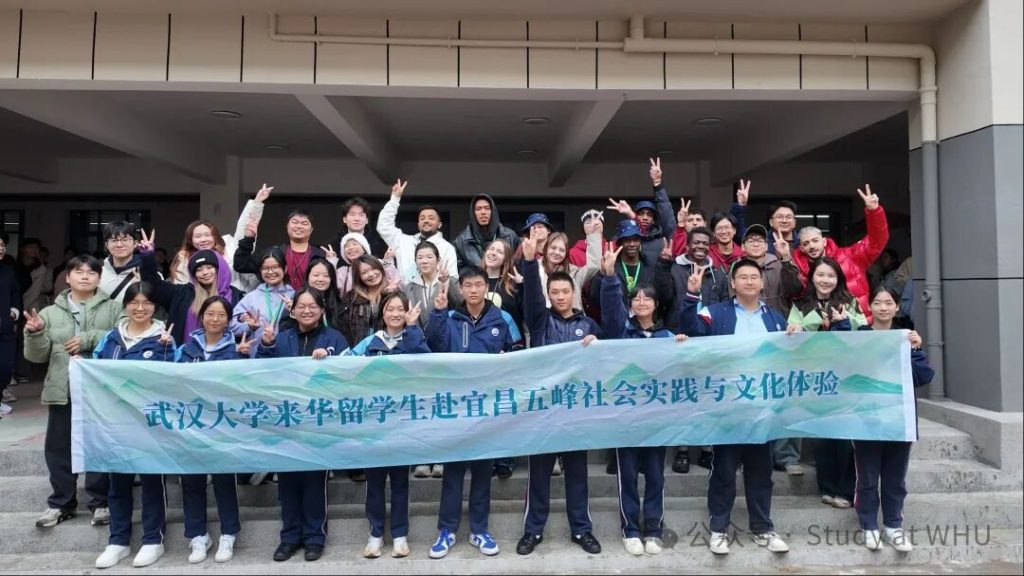
From October 24th to 26th, our college organized 25 international students from 17 countries to go to Wufeng Tujia Autonomous County, Yichang City, Hubei Province to carry out a rich and diverse social practice and cultural experience activity. This activity is another in-depth practice since the college and the Wufeng Tujia Autonomous County Education Bureau jointly established the National Education Base for International Students in China in April 2024, aiming to make full use of Wufeng's unique natural and humanistic resources, so that international students in China can understand and feel China's social and economic development, rural governance, ecological protection and national culture in an all-round and multi-level way, improve their cross-cultural communication skills and global vision, better tell Chinese stories well, and spread Chinese voices.
After arriving at Wufeng, the students first came to the Wulingshan (Hubei) Wildlife Herbarium. The rich ecological specimen system of the Yangtze River Basin in the museum shows regional biodiversity, which teaches students a vivid lesson in understanding the ecological protection concept of the Yangtze River of "joint protection and no large-scale development".
The next day, the itinerary revolved closely around rural development and intangible cultural heritage. The students first visited local tea companies to learn about the standardized production and market development of tea. Subsequently, everyone walked into Wufeng Nationalities Senior High School and had a unique exchange and interaction with the second-year students. Chinese and foreign students sat together, and the topics extended from professional learning to cultural life, and the atmosphere was relaxed and warm. Middle school students showed strong interest in the Chinese names of international students and asked about their meaning and origin. International students shared their rich and colorful study experiences at Wuhan University, as well as their observations and insights from cross-cultural learning. Sincere dialogue not only enhances mutual understanding, but also sows the seeds of friendship in laughter.
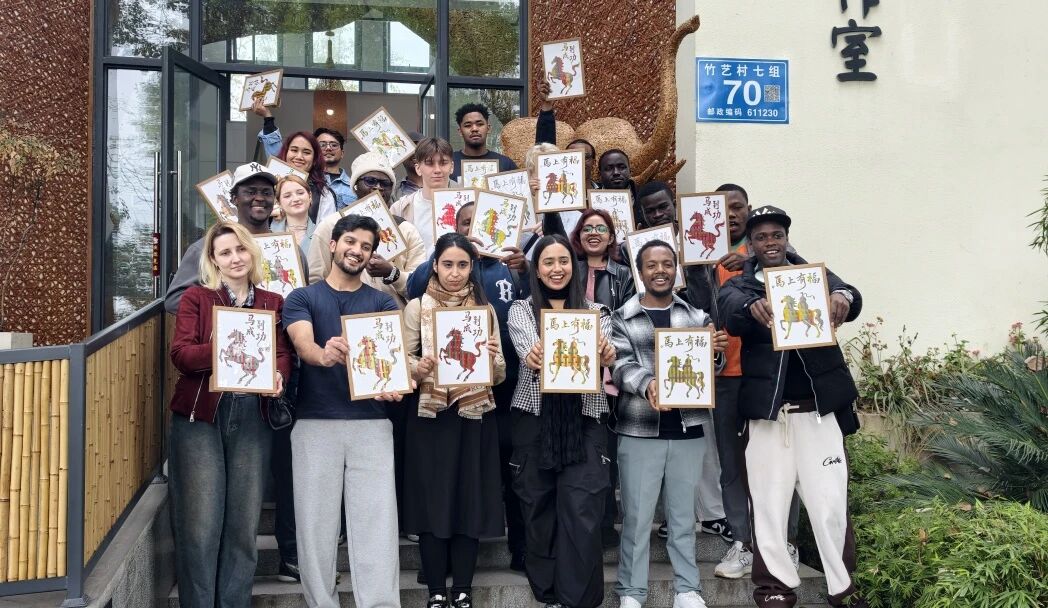
Subsequently, the practice team went to Yangjiacheng Village, Renheping Town. Liu Hufeng, secretary of the village party branch and director of the village committee, introduced to the students that the village originally belonged to the revolutionary base area in western Hunan and Hubei, where Marshal He Long and other revolutionaries of the older generation had led the revolutionary struggle and left a deep red mark. In recent years, Yangjiacheng Village has actively practiced the concept of "lucid waters and green mountains are golden mountains and silver mountains", vigorously developed characteristic planting and rural tourism, and has become a well-known "beautiful rural demonstration village". The students visited the village, investigated the traditional houses featuring "slate houses", painted slate paintings, experienced pushing stone mills to make soy milk, and deeply felt the unique charm of Tujia folk culture and the vivid results of rural revitalization in hands-on practice.
Leaving Yangjiacheng Village, the students came to the Muziping Tea Culture Base. The layers of terraced tea gardens are spectacular, and everyone goes deep into the tea fields, picks autumn tea in the undulating green waves, and feels the harmonious beauty of agricultural landscape and natural ecology. Finally, the students went to the Yangtze River Ecological Civilization Research Base to learn to fry green tea under professional guidance, and deeply appreciated the ingenuity and wisdom contained in the well-known Jingchu tea culture at home and abroad in the experience of kneading and twisting. On the 26th, the students visited the Three Gorges Intangible Cultural Heritage Education Base. The students first walked into the Chuxiang Intangible Cultural Heritage Course Hall and took a unique Chuxiang culture class. Everyone not only learned the traditional cultural knowledge of "fragrance medicine of the same origin", but also recited the classic chapter of "Li Sao" together in the green smoke, and deeply felt the long-standing vanilla culture and elegant aesthetic taste of Jingchu. Subsequently, everyone blended spices and made Chu Xiang incense, so that the thousand-year-old Chu fragrance flowed at the fingertips and felt the rich fragrance of intangible cultural heritage.
Immediately afterwards, the students visited the Yihong tea industry site that witnessed the history of modern tea trade, and explored the integration and development of Wufeng's tea industry in modern production, circulation and international trade as the birthplace of China's Yihong tea and an important node of the "Ten Thousand Miles of Ancient Tea Ceremony". In the Wufeng Intangible Cultural Heritage Exhibition Hall, the students further appreciated the magnificence and colorfulness of Tujia folk culture, and experienced the clear and elegant rhyme of Nanqu, the warm rhythm of the slipper, and the vigor and agility of the bench dragon. Each skill embodies the wisdom and artistic creativity of the Chinese nation, which amazed the students.
This trip to Wufeng is a vivid embodiment of the educational function of our college and the Education Bureau of Wufeng Tujia Autonomous County to jointly build a national education base for international students in China. Through the three-day immersive experience, the international students not only deeply perceived the charm of China's excellent traditional culture, but also witnessed China's grassroots practice under the strategy of ecological civilization construction and rural revitalization. The event effectively built a bridge for cultural exchanges between China and foreign countries, and the students expressed that they would bring the fresh insights and deep thinking of this trip back to campus, and strive to become a cultural envoy of Zhihua and Youhua.
In the future, the college will further enrich the forms, broaden the carrier, give full play to the role of the national education base, promote international students to understand a more real, three-dimensional and comprehensive China, expand people-to-people exchanges, and promote people-to-people ties.