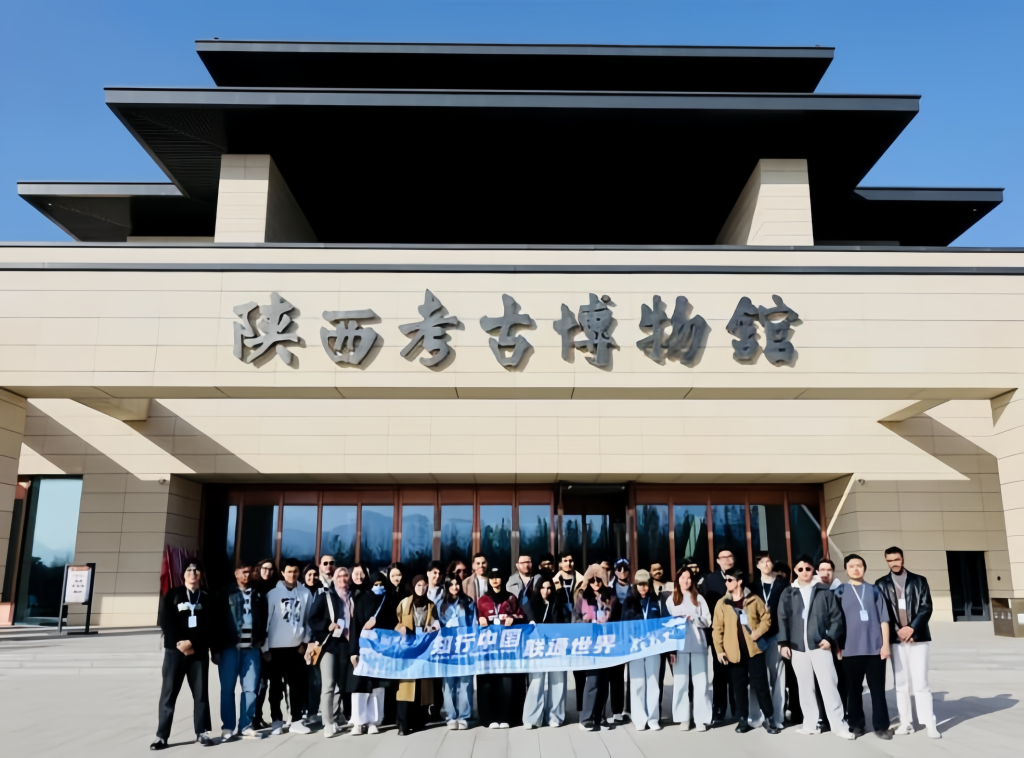
To further improve the system of Chinese national conditions education for international students in China, the School of International Education has newly offered the "Cultural China" course this semester. Centered on China's excellent traditional culture, the course covers humanistic spirit, intangible cultural heritage skills, philosophical thoughts, etc., with a focus on cultural understanding and moral education, guiding international students to understand the ideological connotation and contemporary value of Chinese culture through learning and practice. On November 20, more than 40 teachers and students of the "Cultural China" course completed an "immersive" learning session for the final lesson at the Shaanxi Archaeological Museum, bringing a perfect end to this semester's "Cultural China" journey.
Special Lectures: Fascinating and Engaging
This semester, the "Cultural China" course organized a total of 4 special lectures, which were extensive in content and diverse in form. Teacher Fang Xiaojie from the School of Marxism vividly explained Xi'an's historical heritage and modern vitality as a national central city, presenting the city's image of "ancient and modern brilliance, openness and inclusiveness"; Teacher Zhang Jing, starting with "How to Discover Beauty", showcased the beauty of China from four dimensions: calligraphy, phonology, architecture and technology, conveying the concept of "each appreciates its own beauty, and all beauties coexist harmoniously"; Teacher Ma Jun deeply interpreted the cultural connotation and contemporary significance of the "junzi personality" in The Analects, guiding students to draw wisdom from Chinese culture; Teacher Cheng Wei from the Institute of Cultural Heritage, taking the Silk Road and world heritage as the main thread, explained China's practical achievements in heritage protection and integrated development.
Online Collaboration & Cross-Border Exchange
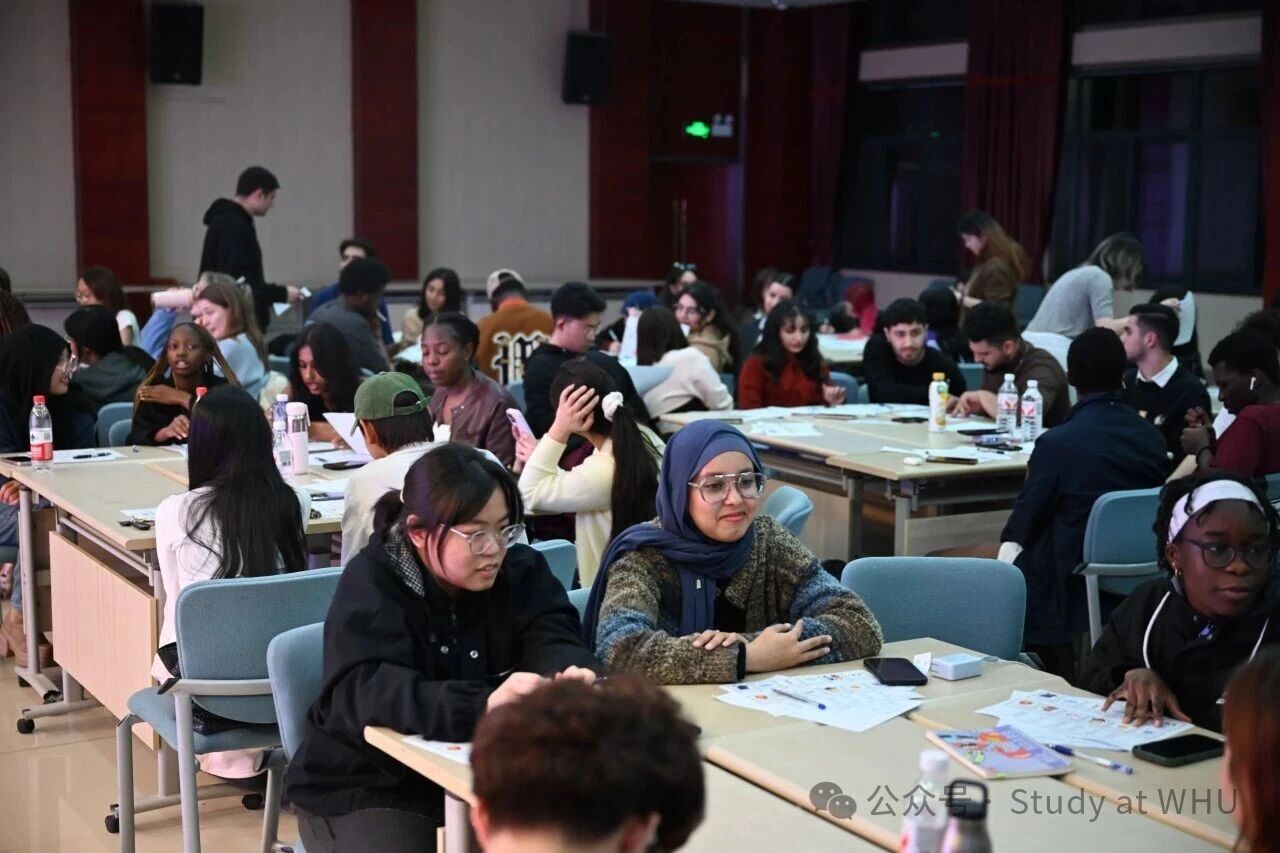
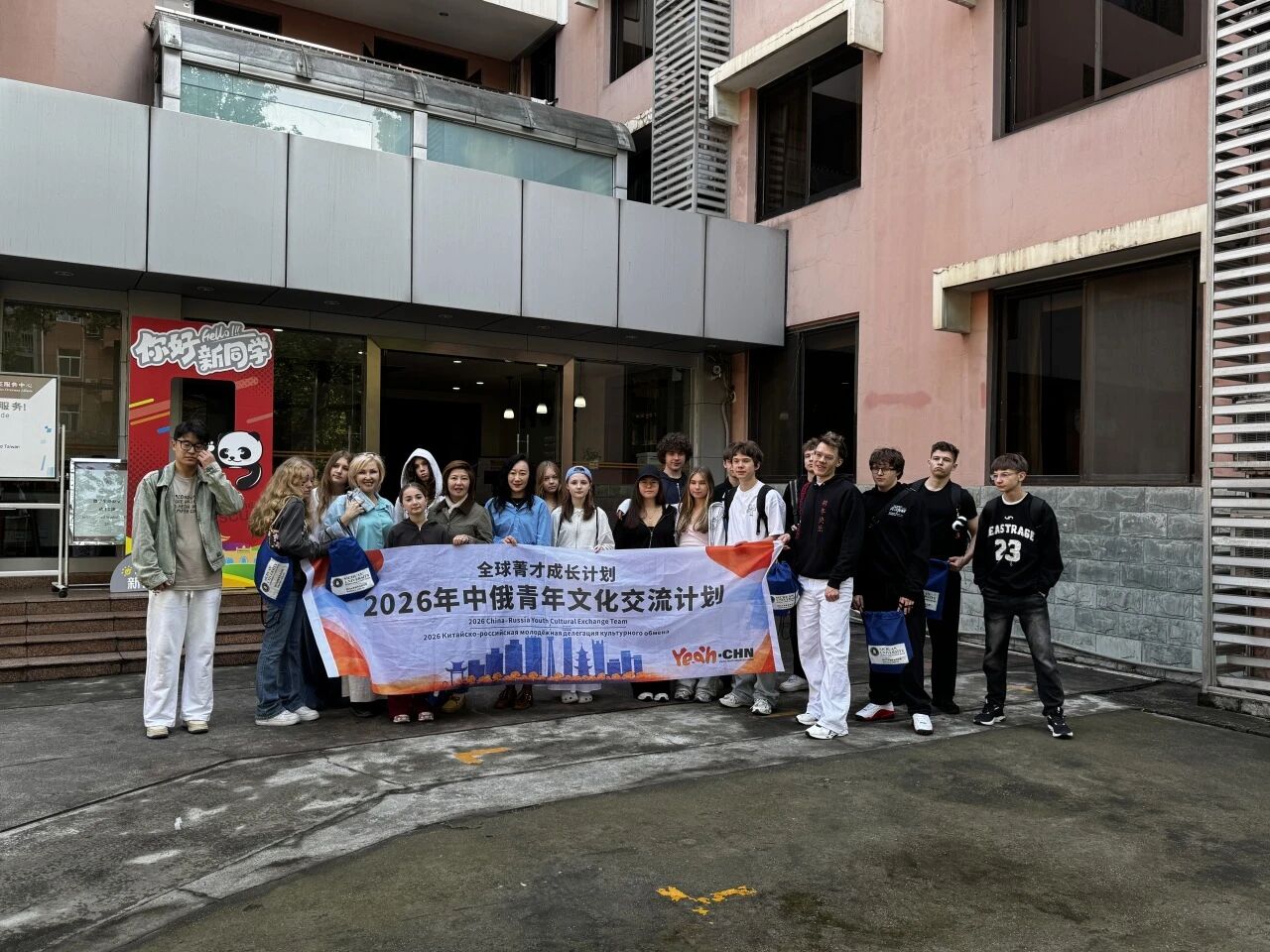
On the afternoon of September 30, the "Cultural China" course invited Dr. Wang Jianbao—research scholar and director of Cheung Kong Graduate School of Business, associate researcher and assistant dean of the Institute for Advanced Humanistic Studies at Peking University—to teach online, sharing insights around the "humanistic spirit" in Confucian thought. Students of the "Cultural China" course studied, communicated and discussed online together with international students from the Kazakhstan Branch and the Chinese Language Center of Kahan-Northwestern Polytechnical University in Russia. Dr. Wang systematically explained the connotation of China's traditional humanistic spirit, and discussed with students how to address today's challenges with ancient wisdom, promoting mutual learning among civilizations and sustainable development.
Cultural Experiences: Deeply Resonant
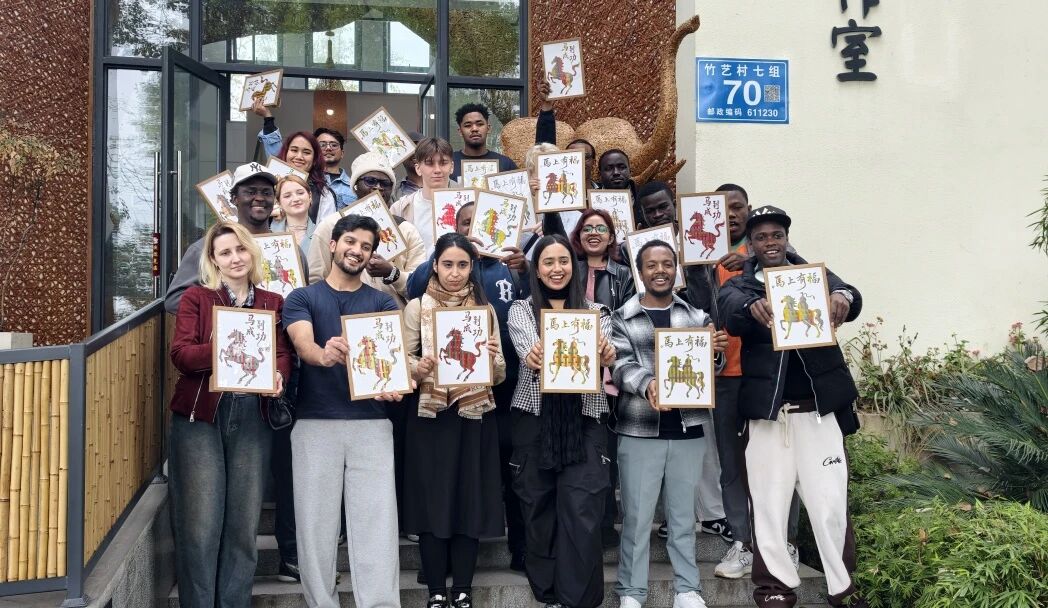
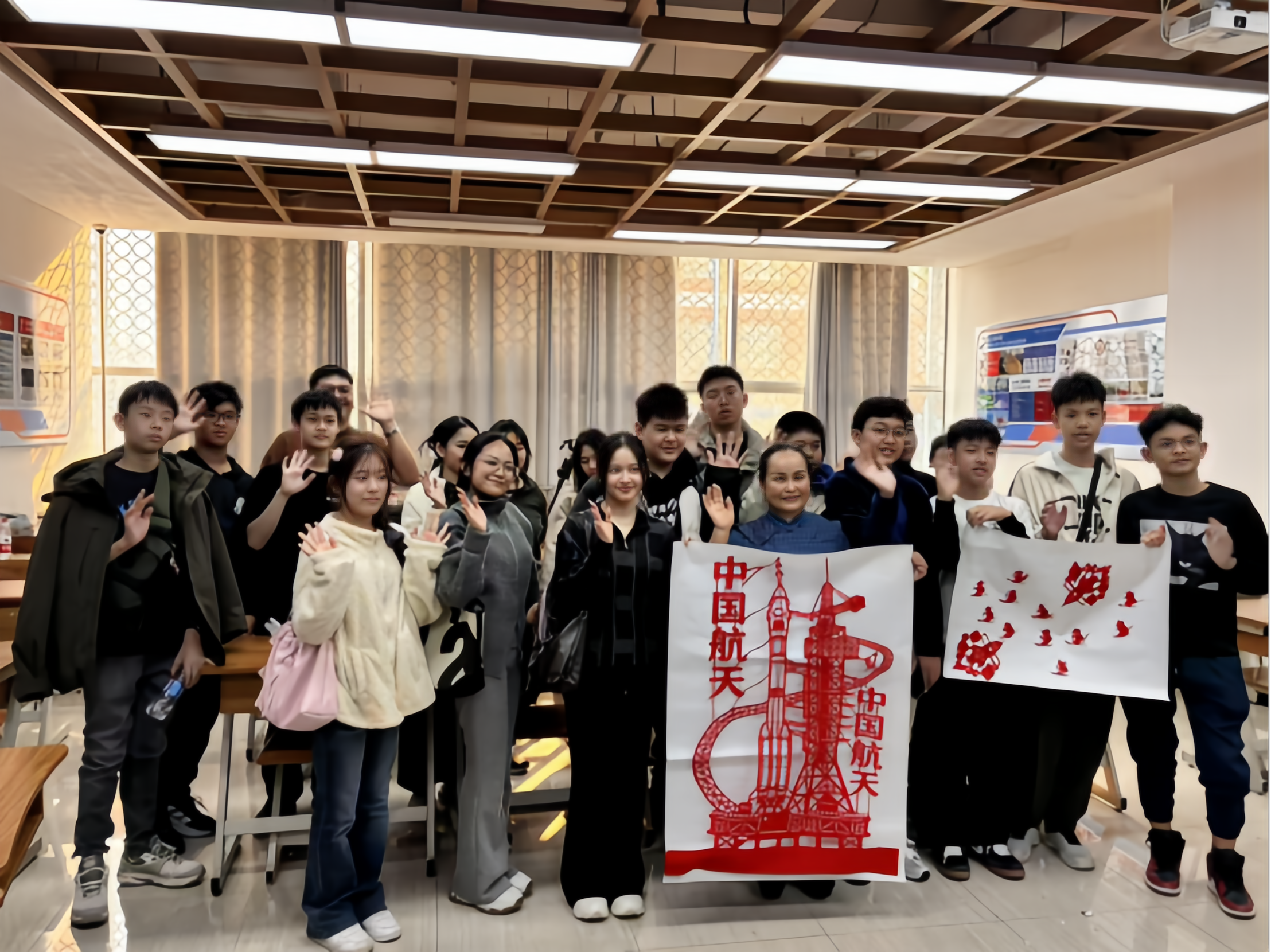
The experiential sessions of the "Cultural China" course this semester were widely praised by students. The "China in Intangible Cultural Heritage—Exploring Traditional Chinese Medicine (TCM) Culture" session explained TCM thoughts and diagnosis and treatment logic through daily-life cases, and organized students to experience therapies such as acupuncture, moxibustion and cupping firsthand to feel the charm of TCM; the "China in Intangible Cultural Heritage—The Beauty of Craftsmanship in Color Tie-Dye" activity showcased the ancient wisdom of integrating skills and culture through hands-on tie-dye making.
Off-Campus Practices: Unity of Knowledge and Action
In the off-campus practice session on November 20, more than 40 students visited the Shaanxi Archaeological Museum—the first national-level museum themed on archaeology in China—embarking on a journey of civilization exploration spanning thousands of years. By observing the excavation, restoration, and exhibition of restored artifacts up close, everyone gained an in-depth understanding of the development and changes of archaeology and archaeological techniques, and realized the precious value of cultural relic protection and civilization inheritance.
Learning & Exchange: Sharing Insights
Liu Wenhao · Morocco
The "Cultural China" course is diverse and rich in form. I was deeply touched by the lecture on "Spiritual Humanism". Scholar Wang Jianbao emphasized that progress requires balancing technological and material development with spiritual awareness. The open discussions among students from different cultural backgrounds connected us through our enthusiasm for knowledge. This experience not only broadened my academic horizons but also deepened my understanding of the common destiny of humanity, leaving a profound mark both emotionally and intellectually.
Mei Di · Mongolia
In the "Cultural China" course, I found the activities very interesting. We learned about Chinese intangible cultural heritage tie-dyeing and also studied related content about TCM—these allowed me to experience Chinese traditional culture firsthand for the first time. I also liked the teacher's lectures; he introduced a lot about the history of China and Xi'an, helping me understand this city better. Through this course, I have gained a deeper understanding of Chinese culture, and it feels very fresh and interesting.
Wang Lang · Bangladesh
The course ‘Cultural China’ has quietly changed my daily life and my perception of China. I see that China's profound history and traditions have never faded. In class, I learned about China's family values, the culture of respecting the elderly and teachers, and the kindness of strangers helping each other—Confucian filial piety is visible everywhere. These warm details made me realize that "living well" is not just about success, but more about balancing health, hard work, and caring for others.
Huang Mulan · Indonesia
The Chinese cultural course at my university was the most eye-opening experience of my college life. It covered harmony, family values, festivals and daily life, showing the internal connections in Chinese society. Class discussions encouraged me to share my thoughts and reflect on my biases, which was deeply meaningful. During the tie-dye activity, I made tie-dye works with classmates—watching colors spread across the cloth and listening to its history brought me great joy. This course not only gave me knowledge but also deepened my cross-cultural understanding. It made me more curious and humble, letting me naturally engage in daily interactions with Chinese people and their traditions.
Mu Ruobai · Pakistan
My recent Culture China classes were eye-opening, yet my visit to Xi'an Archaeology Museum left the deepest impression. Walking through its quiet halls, I felt transported to ancient civilizations—each artifact revealed how early societies endured, adapted, and laid civilization's foundations. Ritual and sacrificial exhibits were particularly striking, showing the spiritual core of ancient communities. This experience fostered a strong sense of connection to humanity's shared historical journey.
Xin Ya · Morocco
My trip to Shaanxi Archaeological Museum was a quiet, meaningful experience I cherish. The ancient inscriptions—carved on bronze utensils and oracle bones—stood out most: seeing these firsthand, I was struck by how they revealed the physical origins of a written language still used today. This made China’s long history feel vividly real, forging a powerful, memorable connection to the past that felt both impressive and deeply tangible.
The School of International Education at Northwestern Polytechnical University (NPU) has now offered three courses on China's national conditions for international students: "Hello China", "Cultural China", and "Modern China". Each course has its own focus and complements the others, jointly building an important platform for international students to perceive China, effectively promoting cultural exchanges and emotional recognition between China and foreign countries. The School of International Education will also continue to innovate the national conditions education model to cultivate more international talents who know China well and are friendly to China.
Northwestern Polytechnical University (NPU)
It is abbreviated as "NPU", located in Xi'an, Shaanxi Province, under the administration of the Ministry of Industry and Information Technology, and a university directly managed by the Central Government. It is a national key university featuring talent cultivation and scientific research in the fields of aviation, aerospace, and marine engineering (the "Three Astronautics"). It is included in the national "Double First-Class" initiative, "Project 985", and "Project 211". It was listed as one of the national key construction universities by the State Council during both the "Seventh Five-Year Plan" and "Eighth Five-Year Plan" periods. It has been selected for the "2011 Plan", "111 Plan", "Excellent Engineer Education and Training Plan", is a member of the "Excellent University Alliance", a founding university of the "Belt and Road Aerospace Innovation Alliance", a national typical experience university for graduate employment, one of the first ten universities in the country to lead the construction of the National Excellent Engineer College, and a university that has been awarded the "Major Contribution Award" twice in a row.
Northwestern Polytechnical University can be traced back to the National Northwest Institute of Technology founded in 1938. In 1946, the National Northwest Institute of Technology moved to Xianyang. In 1950, it was renamed Northwest Institute of Technology. In 1952, the aviation engineering departments of Jiaotong University, Zhejiang University, and Nanjing University were merged to form East China Aviation College in Nanjing. In 1956, it moved to Xi'an and was renamed Xi'an Aviation College. In October 1957, Northwest Institute of Technology and Xi'an Aviation College merged to form Northwestern Polytechnical University. In February 1970, the entire aviation engineering department of Harbin Institute of Engineering (now Harbin Engineering University) was incorporated into it. In 2017, it was included in the list of universities constructing "world-class universities" (Category A).