On the afternoon of November 15, with warm sunshine and gentle breezes, the fragrance of tea filled the Nanguang 5 Shared Space in the Siming Campus. An international student tea culture experience event themed "Savoring Tea to Know Elegance, Spreading Culture with Fragrance" was held here warmly. Organized by the Department of Chinese Language and Literature, the event invited Zheng Yiwen—a 2024 PhD student in the Department of Chinese and a national senior tea assessor—as the keynote speaker. It attracted 15 international students from different countries to gather together and embark on an immersive journey to explore Chinese tea culture. The event aimed to use tea as a medium, through interactive experiences combining theory and practice, to help international students improve their practical Chinese oral communication skills and deeply perceive the profoundness and unique charm of Chinese tea culture.
At 3 p.m., the event kicked off in a relaxed and pleasant atmosphere. Zheng Yiwen led the students into the long-standing river of tea culture with her melodious narration. She started with the ancient legend "Shennong tasted hundreds of herbs, encountering seventy-two poisons a day, and was cured by tea (荼)", analyzed the etymological connection between "荼" and "茶", and revealed the origin of tea as a medicinal herb initially. Next, she systematically introduced the rich system of Chinese tea, which is divided into six traditional tea categories by color: dark tea, black tea, oolong tea, green tea, yellow tea, and white tea. She also explained the differences between the two main processing methods—wet-heat oxidation and enzymatic oxidation—in a simple and easy-to-understand way, pointing out the general rule that "the lighter the tea color, the lower the fermentation degree".
To help students understand more concretely, she took the Minnan specialty oolong tea—Foshou (Buddha's Hand)—as an example, and explained in detail its unique production process through stages such as withering, shaking, fixation, shaping, and drying. Chinese tea ceremony has the spiritual core of harmony, unity of heaven and humanity, physical and mental enjoyment, and returning to simplicity. Zheng Yiwen emphasized that sharing fragrant tea with friends and chatting freely is an indispensable life pleasure and emotional connection in tea culture. Vivid language and frequent interactions kept the atmosphere lively and focused throughout. Students nodded frequently while listening and deepened their understanding through exchanges.
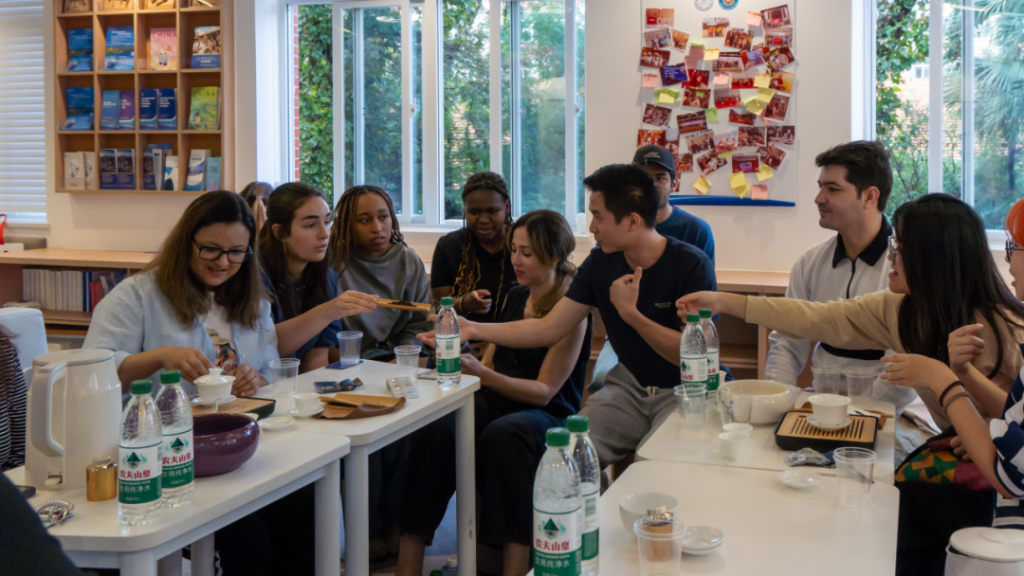
After the immersion in theoretical knowledge, came the highly anticipated tea art practice session. Zheng Yiwen demonstrated her exquisite tea-making skills with smooth and fluid movements: warming the cups and lids, gently smelling the dry tea, and pouring boiling water—her actions were elegant and precise. Students tasted the Foshou tea she brewed by hand; the tea soup was clear in color and refreshingly fragrant. Then, under her careful guidance, students all tried the tea-making technique of "holding the covered bowl, pouring tea with three fingers in a line".
From being slightly unfamiliar to gradually proficient, the fragrance of tea filled the air as the covered bowls rose and fell. Everyone not only tasted the tea they brewed by hand but also exchanged and commented on each other's tea, sharing the fruits of their labor. The event site was filled with laughter and warmth, fully embodying the spirit of harmony and sharing advocated by tea culture. As the afternoon approached evening, the sun was still warm, and the breeze gently caressed the green plants outside the shared space.
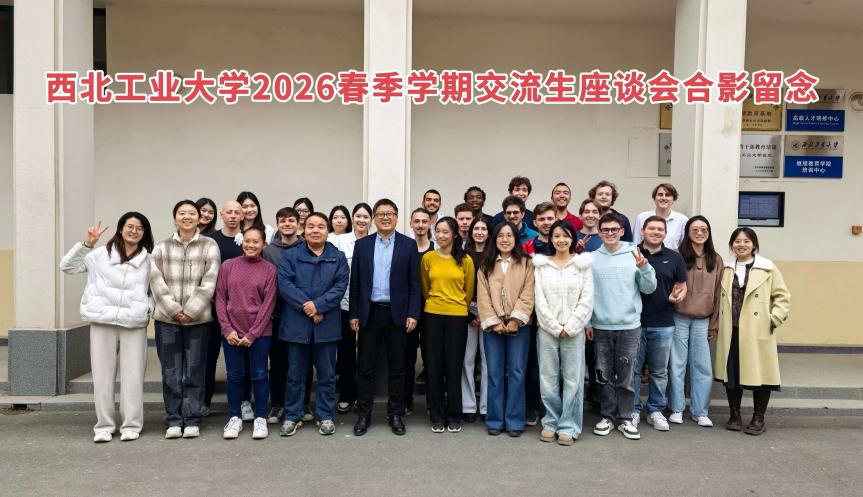
At the end of the event, all teachers and students took a group photo in such a harmonious and peaceful scene, capturing this beautiful moment full of cultural fragrance and friendly exchanges. This was exactly a vivid reflection of the "unity of heaven and humanity" in tea ceremony spirit—the harmony between man and nature, and the harmony between people, all contained in this cup of tea, wisp of fragrance, and piece of warm sun. This tea culture experience event was not only a feast for the senses but also a profound cultural immersion. Through the series of sessions "knowing tea, savoring tea, and understanding tea", international students, in immersive interactions, were able to glimpse the essence of the historical origins, production techniques, and drinking etiquette of Chinese tea culture, and personally feel the unique charm of intangible cultural heritage skills and the profound heritage of Eastern aesthetics.
The event effectively enhanced the communication and understanding between Chinese and international students at Xiamen University, strongly promoted the international dissemination and innovative inheritance of excellent traditional Chinese culture—especially the Minnan-style tea culture—and added a fragrant touch to the construction of a harmonious campus with diverse cultural integration.
厦门大学(Xiamen University)
Nicknamed XMU (Xiamen University), it is located at 422 Siming South Road, Siming District, Xiamen City, Fujian Province (main campus). It is a university directly under the Ministry of Education of the People's Republic of China and under the direct management of the Central Government, a comprehensive research-oriented national key university, a national "Double First-Class" university construction institution, a leading university of the national "2011 Plan", a key construction university of the national "211 Project" and "985 Project". It is also the first university founded by overseas Chinese in the history of modern Chinese education and one of the earliest universities in China to enroll graduate students.
Xiamen University was founded by Mr. Tan Kah Kee, a patriotic overseas Chinese leader, in 1921. In March 1928, it was officially registered as a private university by the government. From 1929 to 1933, Mr. Tan Kah Kee's enterprises were forced to close due to the global economic crisis, and Xiamen University could no longer sustain its operations. He then donated Xiamen University to the government unconditionally. On July 1, 1937, Xiamen University was reorganized into a national university. In September of the same year, due to the war, the university moved to Changting to continue its operations. In 1984, it was granted the right to award master's degrees. In 1986, it was granted the right to award doctoral degrees. In 1997, it was included in the national "211 Project" key construction universities. In 1998, it was included in the "985 Project" key construction program.