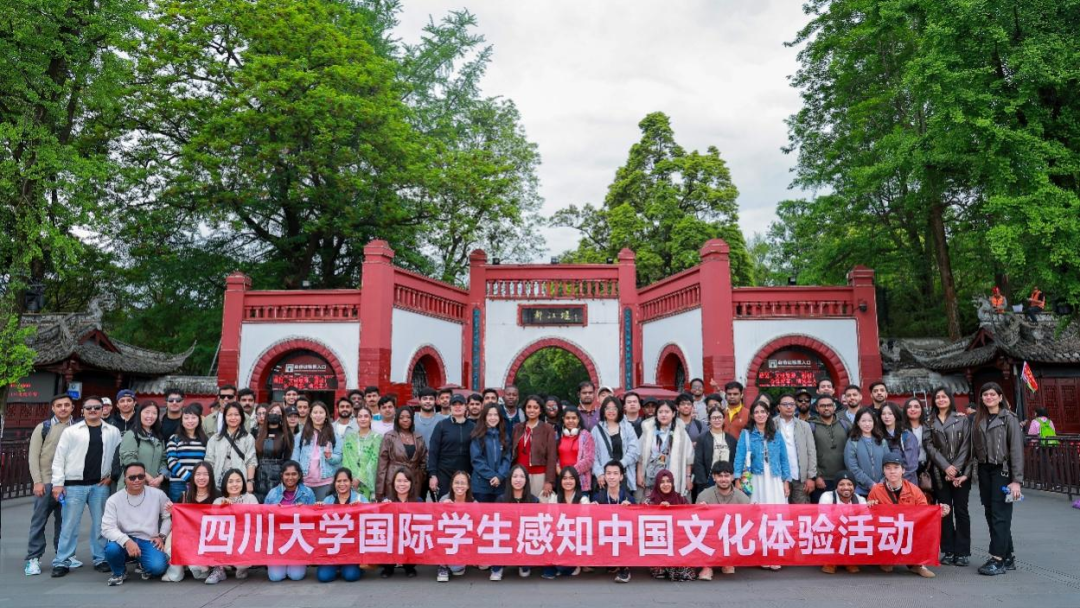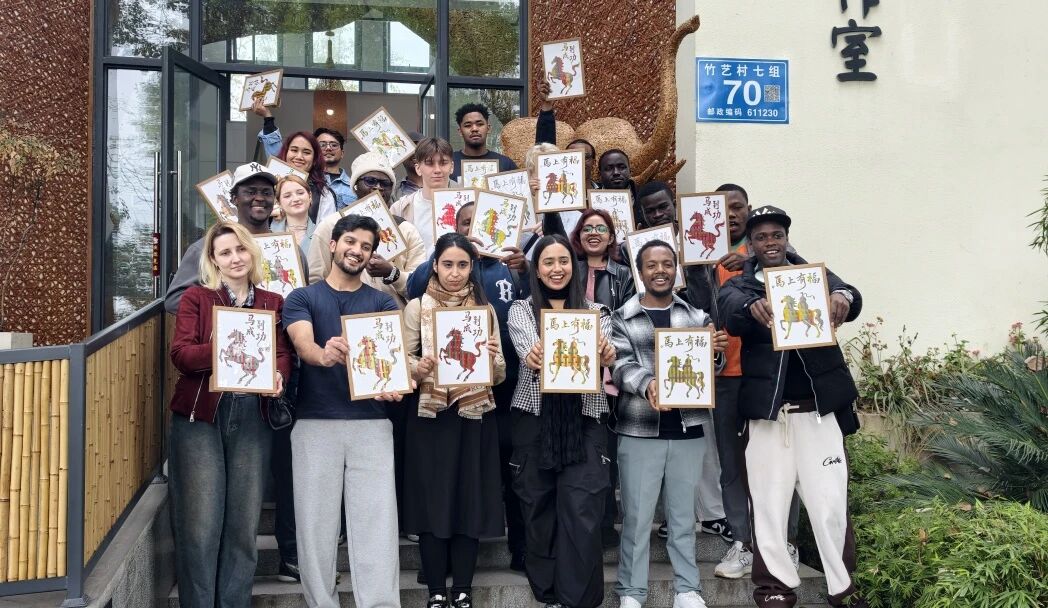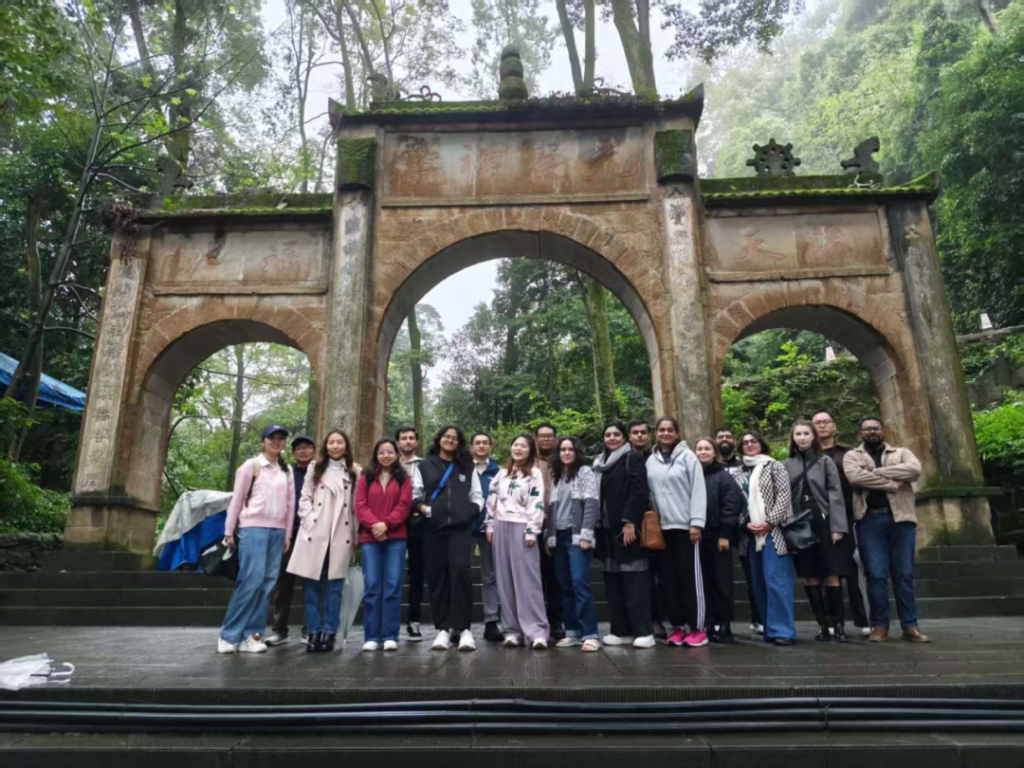
On October 20, 2025, the "Treasure Bashu - Exploring Traditional Chinese Culture and Civilization Dialogue Across the Himalayas" was successfully launched, funded by the International Student Management Office and sponsored by the Institute of South Asian Studies. More than 20 master's and doctoral students from the school, led by Professor Li Tao of the Institute of South Asian Studies and Assistant Foreign Secretary Jiang Xiaoran, walked into Chongzhou Guangyan Zen Monastery, Yanhua Pond and Jiezi Ancient Town, and combined "treasure hunting" interaction with cultural visits to unlock the Bashu cultural code and explore the footprints of civilizational exchanges.
The event was led by Professor Li Tao and gave a lecture on the two major relics of the Shansi Pagoda and the Wukong Spirit Pagoda. "The Shan Si Pagoda commemorates the Indian monk Shan Wusi Zen Master in the Tang Dynasty, which is an important witness to the early Sino-Indian religious and cultural exchanges." Professor Li Tao introduced to the international students, "He not only presided over the translation of scriptures in Chang'an, transformed Sanskrit classics into Chinese, but also chose to practice here after the Anshi Rebellion, and used half a lifetime of practice to build a bridge between the Buddhist cultures of the two countries, which was the most vivid epitome of mutual learning among civilizations at that time." When talking about the Wukong Spiritual Pagoda, Professor Li Tao further added: "The Bayeux Sutra that Patriarch Wukong once crossed the Himalayas and went to India and Tibet to learn scriptures, and finally brought back the Bayeux Sutra, which has now become a precious object that witnesses the dialogue between ancient Bashu and South Asian civilizations." You can imagine how perseverance it took to exchange such cultural exchanges in ancient times when transportation was inconvenient. And this tower is a permanent commemoration of this spirit of persistence and exchange. ”
In the afternoon, the team moved to Jiezi Ancient Town. Students were grouped according to their nationality to start collaborative exchanges, and under the guidance of teachers, they successively visited Chaoyang Village Ziku Pagoda, Tang Gong Ancestral Hall and other places. In front of the Ziku Tower, everyone listened to the influence of papermaking on world civilization and deeply felt the cultural tradition of the ancients of "cherishing paper for calligraphy"; Stroll next to the Ruilong Bridge, carefully observe the architectural details such as the nine-ridge top resting roof and relief stone walls, and intuitively touch the unique charm of Chinese architectural aesthetics. Transitioning to the Chongzhou Confucian Temple, Teacher Jiang Xiaoran guided the international students to stop at the Lingxingmen and Dacheng Hall, and explained the historical significance of the Confucian Temple as a carrier of Confucian culture: from the symbol of "respecting Confucius and valuing education" in the Lingxingmen, to the cultural connotation of the statues of Confucius and his disciples in the Dacheng Hall, and then to the development context of Chongzhou's education recorded in the inscription outside the hall. The international students touched the carvings of the temple and listened to the ideological inheritance of "benevolence, righteousness, propriety, wisdom, and faith".
At the end of the event, the team arrived at the painting pond and visited this classical garden that integrates the characteristics of western Sichuan gardens and cultural heritage under the guidance of Mr. Jiang Xiaoran: the students strolled by the poolside, observed the ingenious layout of pavilions and water bodies, flowers and trees, listened to the historical relationship between the painting pond and Lu You, Fan Chengda and other literati and writers, understood its gardening art as a representative of the classical garden of Bashu, and felt the Chinese aesthetic artistic conception of "one step and one scene".
With the historical sites of Bashu as the "living teaching material" and the multilingual "treasure hunt" as the link, international students have touched the rich heritage of Chinese civilization in the immersive experience and built a bridge of cross-cultural friendship in the exploration of civilizational dialogue.