In the future, the scale of high-quality undergraduate enrollment will continue to expand. The full text of the "Proposal of the Central Committee of the Communist Party of China on Formulating the 15th Five-Year Plan for National Economic and Social Development" (hereinafter referred to as the "Proposal") was released. It mentions promoting the quality and expansion of higher education and expanding the enrollment scale of high-quality undergraduate education. The 2025 government work report proposes to "solidly promote the expansion of high-quality undergraduate schools".
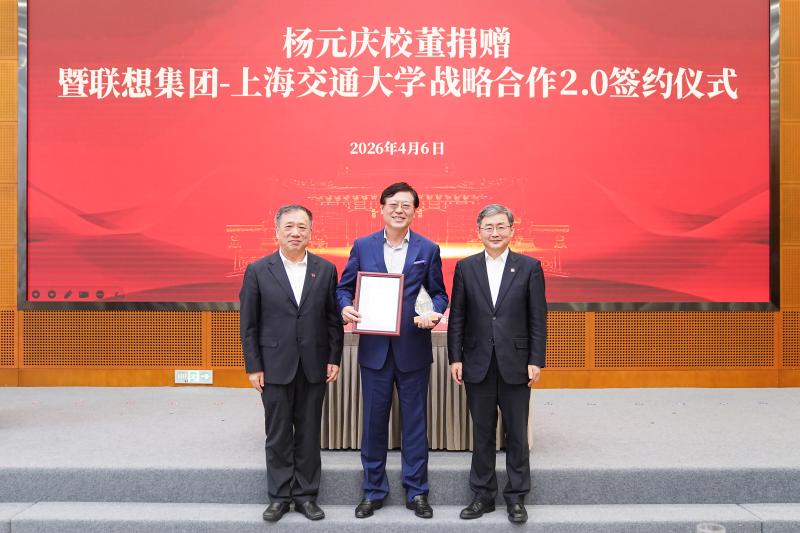
On March 6 this year, Zheng Zhajie, director of the National Development and Reform Commission, said at an economic press conference held at the third session of the 14th National People's Congress that it will promote the expansion of high-quality undergraduates and further increase the scale of undergraduate enrollment in "double first-class" universities. On the basis of last year's expansion of 16,000 people, this year we will strive to increase by another 20,000. Since then, double first-class universities have intensively announced undergraduate enrollment expansion this year, including Tsinghua University, Peking University and Shanghai Jiaotong University all announced undergraduate enrollment expansion by 150 students this year.
Chu Zhaohui, a researcher at the Chinese Academy of Educational Sciences, previously analyzed to Yicai that the gross enrollment rate of higher education in China has exceeded 60%, but among them, high-quality undergraduates are only a relatively small proportion. The current situation is that it is not difficult to go to college, but it is more difficult to go to a good university. To solve the problem that it is not difficult to go to college and to go to a good university, it is necessary to expand and improve the quality of higher education, and promote it from the existing high-quality undergraduates.
The "Proposal" mentions that focusing on scientific and technological innovation, industrial development and national strategic needs to coordinate education, optimize the layout of universities, promote reform by classification, coordinate discipline settings, further promote the construction of "double first-class" universities and national interdisciplinary centers, strengthen the gathering and training function of scientific research institutions, innovation platforms, enterprises, and scientific and technological plans, and cultivate top-notch innovative talents. At present, the number of high-quality undergraduate enrollment is mainly to serve the national strategic needs and social development needs, focusing on cutting-edge technologies and emerging formats urgently needed by the country.
For example, Shanghai Jiao Tong University plans to continue to increase the number of undergraduate enrollment by 150 in 2025, focusing on cutting-edge technologies and emerging formats urgently needed by the country, and expanding the enrollment scale of the three leading industries such as artificial intelligence, integrated circuits, biomedicine, as well as medical and health, new energy and other disciplines. From the perspective of university types, in recent years, the development of new research universities has entered the fast lane. Such universities take innovative governance models, talent training models and scientific research organization forms as breakthroughs, and take scientific and technological research as the main task, with high starting points, large investment, high level and internationalization.
At present, China has new research universities such as Southern University of Science and Technology, Shanghai University of Science and Technology, Westlake University, Shenzhen University of Technology, Rehabilitation University, Fujian Fuyao University of Science and Technology, Greater Bay Area University, and Ningbo Oriental University of Science and Technology. New research universities have also become the choice of more and more high-scoring candidates. Among them, this year is the first year of undergraduate enrollment in new universities such as Fujian Fuyao University of Science and Technology, Ningbo Oriental University of Science and Technology, and Greater Bay Area University, and the admission score line is comparable to that of 985 universities, and even exceeds many 985 schools.
At the same time as the rise of new research universities, traditional prestigious universities are also accelerating the adjustment of faculties and departments and the innovation of talent training models, and increasing investment in emerging cutting-edge disciplines and key fields. Since May this year, a number of "double first-class" universities have intensively announced the establishment of new colleges, focusing on artificial intelligence, future technology, aerospace technology, quantum technology, AI+, information communication and other fields. Starting from 2025, Tianjin University plans to focus on the construction of integrated circuit intelligent chips and microsystems, artificial intelligence, quantum technology, flexible electronics, synthetic biology, earth system engineering, brain-computer interface, embodied intelligence, new energy storage, low-carbon chemical industry, and new materials in 11 training directions within two years.
On June 30, the Department of Higher Education of the Ministry of Education issued the "Notice on Carrying out the Establishment of Undergraduate Majors in Ordinary Colleges and Universities in 2025". The "Notice" proposes to optimize professional settings based on national strategy, market demand and scientific and technological development. Take the optimization of professional settings as the focus of higher education reform, scientifically adjust professional settings and talent training models, deepen the construction of new engineering, new medicine, new agriculture, and new liberal arts, promote the reshaping of the curriculum system and teaching content, upgrade and transform existing majors, cultivate cross-integrated emerging majors, create characteristic and advantageous professional clusters, and continuously improve the fit between higher education and economic and social development needs, so as to provide strong support for Chinese-style modernization.
The "Notice" requires that the layout of the urgently needed majors is urgently needed. Support colleges and universities to target strategic emerging industries and future industries such as integrated circuits, artificial intelligence, biotechnology, quantum technology, new energy, new materials, low-altitude economy, embodied intelligence, and autonomous driving, key fields such as foreign-related rule of law, international communication, international organizations, and financial technology, as well as modern service industries such as nursing and health care, cultural tourism, and logistics.
In addition, with the expansion of high-quality undergraduate enrollment, postgraduate enrollment and the adjustment of college faculties and majors, many double first-class universities have also built and opened new campuses. In the opening season of September this year, the new campuses of many "double first-class" universities welcomed the first batch of new students. From the perspective of discipline layout, the new campuses of many double-first-class universities are mainly used to lay out emerging interdisciplinary and cutting-edge key disciplines. For example, on October 28, the groundbreaking ceremony of the Panlongcheng Campus of Central China Normal University and the groundbreaking ceremony of the supporting projects of the primary and secondary schools affiliated to China Normal University were held in the Panlongcheng Economic Development Zone, Huangpi District, Wuhan. The Panlongcheng Campus of Central China Normal University will form a pattern of "unified planning, dislocation layout, and complementary advantages" with the Nanhu Campus of Guizishan, focusing on six major fields, focusing on the development of artificial intelligence, integrated circuits, life and health, biological breeding, green pesticides, brain science, new materials and other disciplines urgently needed and emerging fields by national strategies, introducing a group of strategic scientists, young scientific and technological talents and innovation teams, focusing on cultivating top-notch innovative talents, carrying out key core technology research, and producing high-level scientific research results. Enhance the support for the radiation of education and science and technology in the central region.
On the morning of September 12, the groundbreaking ceremony of the construction of the Wuxi campus of Nanjing University of Posts and Telecommunications was held in Huishan District, Wuxi City. The Wuxi campus of Nanjing University of Posts and Telecommunications has a school scale of about 10,000 students, and will build five secondary colleges, including the School of Future Information Science and Engineering, the School of Intelligent Software and Engineering, the School of Industrial Internet and Robotics, the School of Internet Finance, and the School of International Studies, and set up 11 undergraduate majors.