When artificial intelligence becomes the "strongest brain", how should international higher education be reshaped? How to effectively achieve cross-border integration and international network construction in engineering education?
As an important follow-up to the "CEIBS University Presidents' Dialogue" held in Madrid, Spain in December last year, on the afternoon of October 17, the 2025 CEIBS Presidents' Dialogue with the theme of "Engineering Education and Global Cooperation in the Intelligent Era" was held in the East District of Siping Road Campus of Tongji University. Representatives of well-known enterprises and internationally renowned scholars gathered together to conduct in-depth dialogues on the theme and discuss the future of China-EU engineering education cooperation in the intelligent era.
As a result of this dialogue, the "Engineering Education and Global Cooperation in the Era of Intelligence - 2025 China-Europe Presidents' Dialogue on Excellence and Cooperation Declaration" was released.
Huai Jinpeng, Secretary of the Party Leadership Group and Minister of the Ministry of Education, delivered a video speech. Six, Secretary General of the German Academic Exchange Center, and Zheng Qinghua, Secretary of the Party Committee of Tongji University and Academician of the Chinese Academy of Engineering, attended the meeting and delivered speeches respectively. Xi Ru, second-level inspector of the Department of International Cooperation and Exchange of the Ministry of Education, Wang Wei, counselor of the European Department of the Ministry of Foreign Affairs, and Tian Lulu, deputy secretary-general of the China Scholarship Council, attended the meeting.
Huai Jinpeng said that this year coincides with the 50th anniversary of the establishment of diplomatic relations between China and the EU. Over the years, China-EU higher education cooperation in various fields has achieved fruitful results. In December last year, we held the first China-Europe University Presidents' Dialogue in Madrid, Spain, and through the efforts of all parties, we promoted the establishment of a dialogue mechanism between the presidents of China-Europe universities of excellence, and China-EU higher education cooperation reached a new level. At present, global development is facing profound changes, giving universities new missions and responsibilities of the times. Facing the future, educational exchanges, cooperation and value guidance are more important than ever, and excellent universities should become an important force that transcends borders, bridges differences, and promotes development. It is hoped that Chinese and European universities will work together to build a mechanism platform to strengthen China-EU higher education dialogue and build consensus, jointly create a mechanism platform to address the challenges of sustainable development and put forward more effective solutions, and jointly create a mechanism platform to promote mutual learning among civilizations and enhance friendship.
Zheng Qinghua said that for more than 100 years, Tongji University has always continued the tradition of cooperation with Europe with an open attitude and is at the forefront of Sino-foreign educational exchanges. At present, the wave of scientific and technological revolution, especially AI, is accelerating, and global higher education governance is facing unprecedented new challenges and opportunities. Chinese and European universities should build a more open and efficient cooperation network ecology, gather multilateral cooperation and synergy, and achieve the "multiplication effect" of talent training quality and scientific research and innovation results. We look forward to colleagues colliding ideas, building consensus, drawing a clear and feasible "roadmap" for the future of China-EU higher education cooperation, and jointly writing a new chapter in the win-win development of China-EU education.
Six said that together we are witnessing the world changing at an astonishing rate, especially the rapid rise of artificial intelligence, which is reshaping the global economy, society and higher education. At present, in the face of major challenges faced by the world, only by uniting countries and strengthening extensive international exchanges and cooperation can we jointly explore feasible solutions and create a better future. I believe that today's dialogue will establish new links and provide new opportunities for further deepening China-EU cooperation.
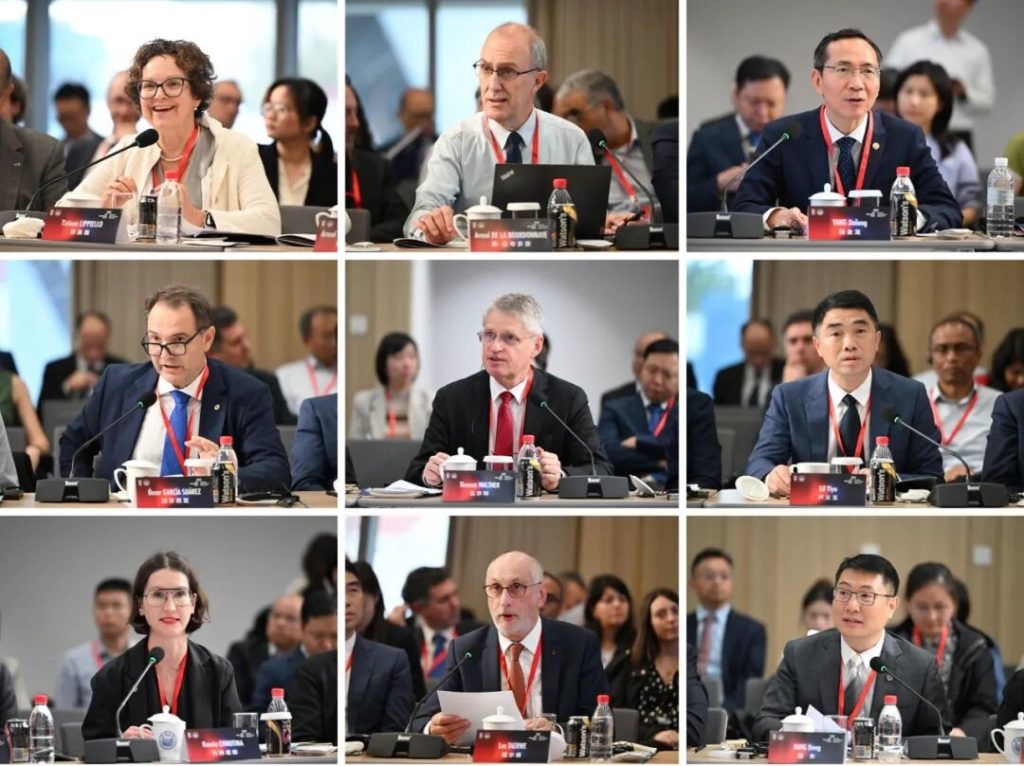
In the first theme forum, focusing on the topic of "Reshaping International Higher Education in the Era of Artificial Intelligence", Li Jiya, President of the University of Venice, Italy, De Labudonay, President Plenipotentiary of the French National School of Applied Sciences Group, Yang Jinlong, President of Tongji University and Academician of the Chinese Academy of Sciences, Garcia, President of the Technological University of Madrid in Spain, Walter, Vice President of the Technical University of Darmstadt in Germany, Lu Yiyu, Vice President of Chongqing University, Kertina, Vice President of Loughborough University in the United Kingdom, and Special Representative of the President of Ghent University in Belgium, Tarvi, academician of the Royal Belgian Academy of Sciences, Ming Dong, vice president of Tianjin University, Toda, vice president of the University of Rome III, Italy, Fabreg, vice president of the National School of Applied Sciences in Lyon, France, Zhao Changsheng, vice president of Sichuan University, Abramovic, special representative of the president of the Ruhr University Bochum and academician of the German Academy of Engineering, Dr. Droto, special representative of the president of the University of Pavia in Italy, Yi Fan, vice president of Shandong University and dean of Qilu Medical College, and other 15 university presidents and vice presidents who attended the meeting made reports and shared the latest practices and thoughts.
Universities should promote artificial intelligence to empower education, teaching and scientific research, explore new models of talent training and new paradigms of scientific research in the intelligent era, but at the same time maintain a cautious attitude to ensure the responsible use of artificial intelligence.
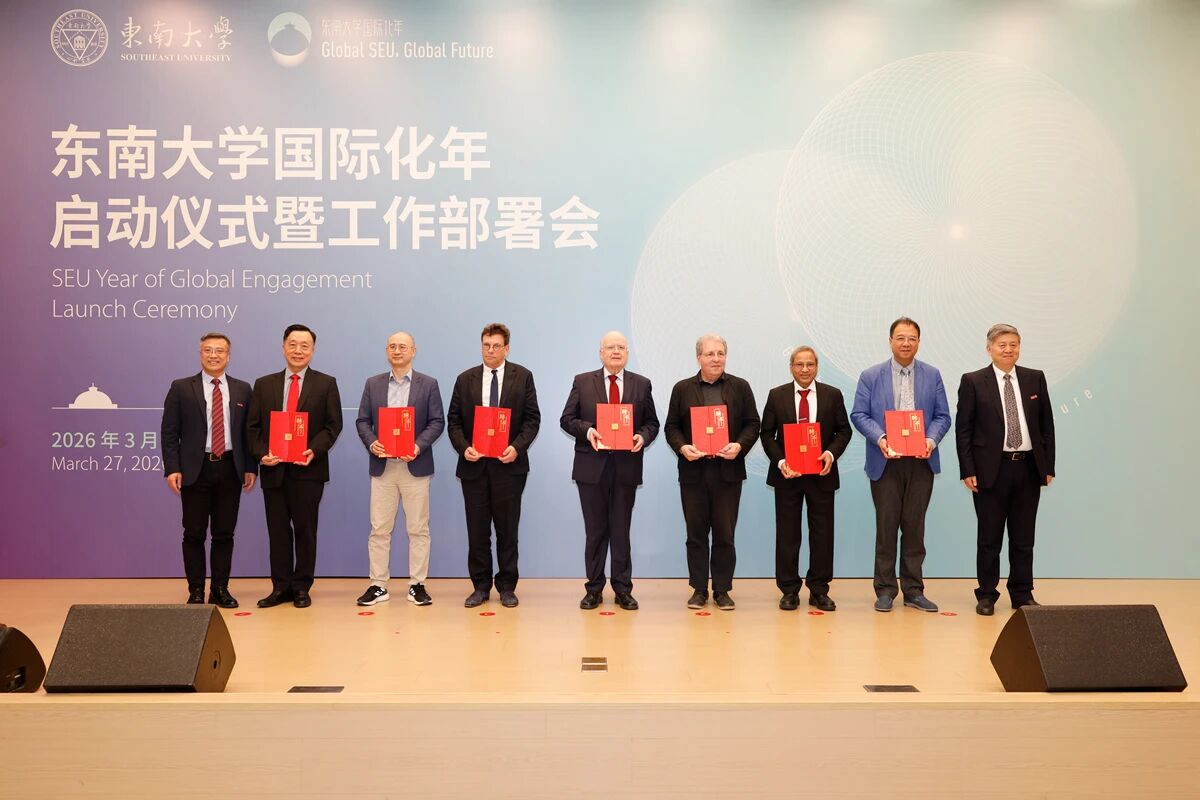
In the second theme forum, focusing on the agenda of "cross-border integration and international network construction in engineering education", Ittel, President of the Technical University of Braunschweig in Germany and Chairman of the 9-School Alliance of German Technical Universities, Torres, President of the Technical University of Catalonia in Spain, Ding Kuiling, President of Shanghai Jiao Tong University and Academician of the Chinese Academy of Sciences, Cavalier Li, President of the University of Belcamo in Italy, Berbier, President of the National School of Applied Sciences in Hauts-de-France, Zhang Liqun, President of Xi'an Jiaotong University and Academician of the Chinese Academy of Engineering, De Florian, President of the University of Trento, Italy, Reynolds, Head of Innovation and Sustainability of Covestro Asia Pacific Group and Head of Asia Pacific Innovation Center, Wendler, Executive Vice President of the University of Technology and Applied Sciences Berlin, Germany, Sabora, Vice President of the Politecnico University of Turin in Italy, Kang Xudong, Vice President of Dalian University of Technology, Whistman, Vice President of the French School of Architectural Engineers, Mazzola, Vice President of the University of Palermo, Italy, Xu Yong, Vice President of South China University of Technology and Dean of the National Academy of Outstanding Engineers, Dean, Special Representative of the President of the University of Birmingham and Dean of the School of Engineering, Special Representative of the President of the Karlsruhe University of Technology in Germany, Director of the Institute of Information Processing Technology and former Vice President Baker, Vice President of Southeast University Zhong Wenqi, Director of the 9 Universities of German Institute of Technology Koschmann and other 18 university presidents and vice presidents who attended the meeting made reports to share their experiences and express their opinions.
Everyone said that in order to cope with global challenges, deepening extensive interdisciplinary and cross-border exchanges and cooperation has become an inevitable choice for current engineering education. Universities should break down disciplinary barriers and geographical boundaries, build a new ecology of open, collaborative and win-win engineering talent training, and work together to cultivate outstanding engineers who can truly lead the future.
Garcia, President of the Polytechnic University of Madrid, and Lu Peiming, Executive Vice President of Tongji University, presided over the theme forum respectively, and Li Xiangning, Vice President of Tongji University, presided over the opening ceremony of the dialogue.
Also attending the meeting were international institutions such as UNESCO and the German Science Foundation, as well as relevant persons from Gustave Eiffel University in France, Polytechnique Haut-de-France, École Normale Supérieure de Lyon, Royal Institute of Technology in Sweden, Fudan University, University of Science and Technology of China, Huazhong University of Science and Technology, University of Electronic Science and Technology of China, University of Nottingham Ningbo and other Chinese and European universities.
In-depth exchanges and discussions have reached a broad consensus. At the meeting, the "Engineering Education and Global Cooperation in the Era of Shaping Intelligence - 2025 China-Europe Outstanding University Presidents' Dialogue and Tongji Declaration" was released. The Declaration pointed out that at present, a new round of scientific and technological revolution and industrial transformation is accelerating, and only openness, collaboration, trust and cooperation can universities better benefit mankind and contribute to the sustainable development of human civilization.
Embrace intelligence and create the future together. We should be committed to breaking through the traditional education framework, making good use of artificial intelligence technology, and jointly exploring a new form of education that integrates virtual and real and human-machine symbiosis. With a mission to cultivate future leaders who can harness artificial intelligence, with critical thinking and innovation, strengthen multilateral collaboration to shape a smarter, more equitable, and more insightful future of education.
Innovation without boundaries and co-cultivate talents. We should work together to break down the disciplinary barriers of traditional engineering education, deepen the integration of industry and education, and jointly create an open, unbounded, collaborative and win-win innovation ecology. Work with enterprise partners to jointly create a cross-border industry-education integration talent training and cooperation network, and jointly cultivate outstanding engineering talents who adapt to the future, transform the future, and lead the future in the intelligent era.
Work together for win-win development. We are willing to use the CEIBS Presidents' Dialogue as a platform to promote a more resilient and in-depth international cooperation network. Integrate the traditional international cooperation paradigms between universities, such as student mobility, teacher exchange, cooperative education, joint scientific research, and paper publication, and jointly create a multilateral ecosystem of knowledge sharing, talent co-education, and scientific research collaboration, and build a new university cooperation network.