Catherine Walker, an American student who has studied in China twice, stated that her two educational experiences in China spanning a decade allowed her to deeply appreciate the massive differences between the Chinese and U.S. higher education systems in terms of tuition costs, campus culture, and career development paths. These experiences also led her to re-examine the value and shortcomings of American universities.
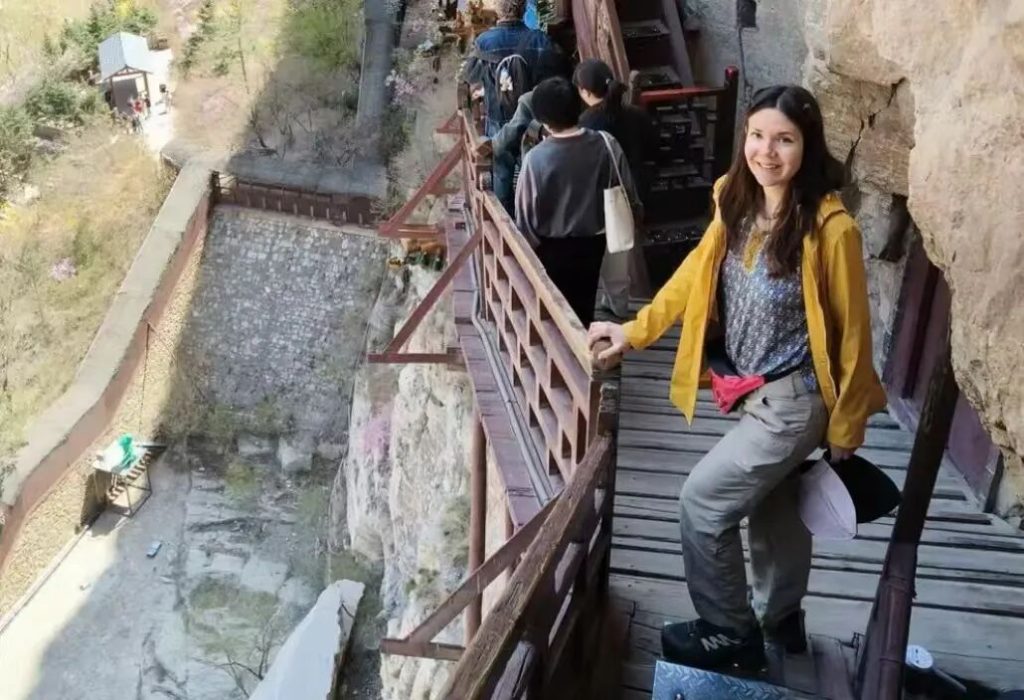
According to a report by Business Insider, after obtaining her bachelor’s degree in political science from a state university in New York in 2015, Walker traveled to Wuhan, China, to participate in a summer study program. In 2025, she returned to China to pursue a Master’s degree in Global Health in Shijiazhuang and interned at a local medical university. The ten-year gap between her two study abroad periods allowed her to observe the operations and developments of the Chinese higher education system from different stages of life.
Walker noted that during her first trip to China in 2015, she traveled with about 30 other American college students; however, when she returned in 2025, she was the only American in her class. According to NPR, the number of American students studying in China has dropped significantly following the COVID-19 pandemic. Walker said that during her most recent three-month stay in China, she did not encounter any other American students. However, during both of her stays, she met a large number of students from African countries. These students generally actively integrated into China’s academic and employment systems, establishing long-term development plans locally.
In contrast, Walker pointed out that during her studies in New York, many international students told her that it was difficult to integrate into local society and hard to find clear career paths after graduation. In China, she saw a different model: universities and the government proactively design development paths for international students. Students with strong Chinese language proficiency, in particular, find it easier to obtain internships and employment opportunities. She believes that Chinese universities are actively attracting international students while investing resources to help graduates remain and develop locally.
Walker stated that campus life in Chinese universities is starkly different from that in the United States. She noted that classroom discipline reflects different cultures; she had even seen American doctors and lecturers smoking directly in classrooms during breaks. Regarding student life, most Chinese campuses exercise strict control over alcohol and drugs. After class, Walker more frequently saw classmates playing badminton or engaging in sports for socialization, rather than partying and drinking like American college students. Additionally, technological management and security measures are very prominent on campus. The school she attended required facial recognition for entry and exit, and the campus was equipped with extensive surveillance equipment.
Walker pointed out that while the Chinese university she attended lacked the luxurious sports facilities common in American colleges, the financial pressure on students was significantly lighter. Tuition at Chinese public universities is subsidized by the government, meaning most students do not need to shoulder heavy student loans. The advantage in living costs is even more apparent. Walker recalled that a healthy lunch in a Chinese campus cafeteria cost only about $1; by comparison, when she was in college in the U.S. in 2015, a single banana in a campus store cost as much as $1.05.
Walker mentioned that she spent a year in the U.S. taking general education courses. While she enjoyed courses unrelated to her major, such as a “Bollywood Culture” class, these courses increased both time and financial costs. In contrast, the curriculum in Chinese universities emphasizes specialization and career orientation, helping students connect with real-world workplace demands earlier while saving on the extra expenses brought by general education.
Walker believes her educational experiences in both countries allowed her not only to earn degrees but also to deeply understand the institutional differences behind educational cultures. She stated that she still prefers the academic atmosphere of American universities that encourages “questioning everything” and independent thinking, whereas Chinese classrooms place more emphasis on memorization and standard answers. However, she admitted she did not want to enter the workforce under the pressure of heavy student loans. Walker expressed her hope that more American students will personally experience China’s rapidly developing and unique higher education system in the future to form independent judgments from different systems.