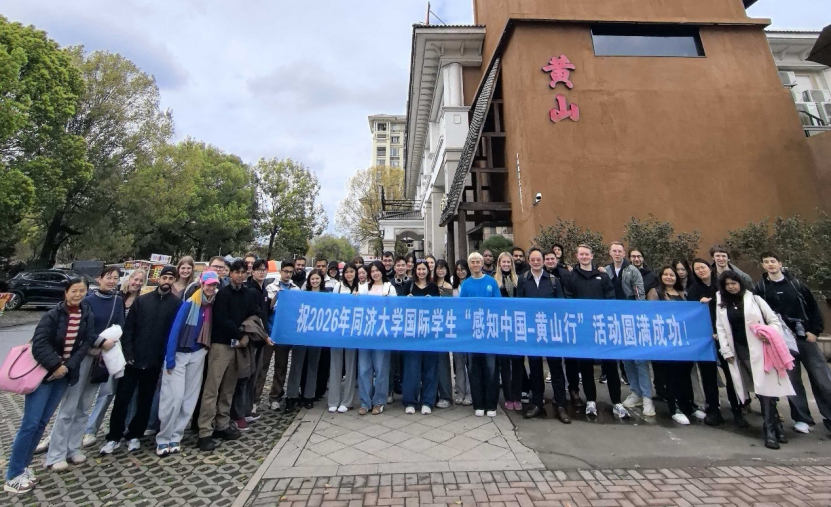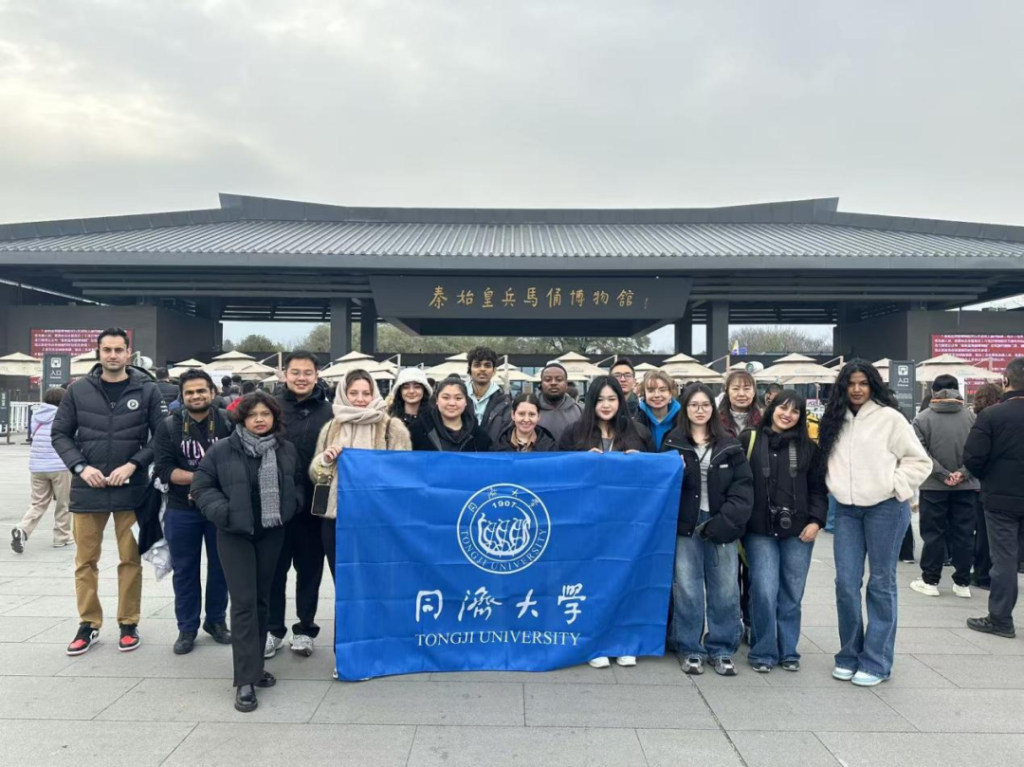
Recently, the International Students Office of Tongji University planned and organized the "Perceive China · Xi'an Journey" social practice activity. The event gathered nearly 20 student representatives from countries including Germany, Cambodia, Chile, Russia, Turkey, Colombia, Pakistan, India, South Africa, Mauritius, New Zealand, and Côte d'Ivoire. They personally experienced China's historical accumulation, cultural heritage, and social development, and felt China's past, present, and future through the integration of "knowledge" and "action."
Climb the Ancient City Wall, Touch the Ramparts of History
The first stop of the activity was the Xi'an Ancient City Wall—this is the largest and best-preserved ancient city wall in China, and an outstanding representative of the defense system of the Ming Dynasty capital.
The students strolled along the city wall, and through the towering arrow towers and solid brick ramparts, they imagined the bustling scenes of soldiers guarding Chang'an and merchants traveling to and fro a thousand years ago. Listening to the historical changes of Xi'an as the capital of thirteen dynasties, they intuitively felt the profound heritage and urban memory of a "Chinese ancient capital" for the first time.
Explore the Beauty of the Forest of Steles, Recognize the Soul of Chinese Characters
At the Xi'an Forest of Steles Museum, the students immersed themselves in the corridor of steles, appreciating inscriptions, calligraphy models, and epitaphs from various dynasties up close, and learned about the evolution of Chinese character art. Students from Germany and India said that when they saw the regular script of the Tang Dynasty and the official script of the Northern Stele, they were deeply moved by the beauty of Chinese characters and the cultural spirit contained behind Chinese calligraphy.
Explore Chinese Civilization, Visit the Relics of the Prosperous Tang Dynasty
Daci'en Temple is one of the most magnificent Buddhist temples in Chang'an during the Tang Dynasty. In a solemn and respectful atmosphere, the students listened to the story of Monk Xuanzang's westward journey to fetch scriptures, and felt the spiritual link of cultural exchanges between the East and the West a thousand years ago. Many students said that this was their greatest gain from the "Perceive China" activity—seeing the open and inclusive cultural genes in history. Afterwards, they went to the Shaanxi History Museum. The students walked through the exhibition halls, from bronze ware, jade, Tang tri-color pottery to Silk Road cultural relics, and felt the glory and continuity of Chinese civilization. Each exhibit became a window to tell the story of the Chinese nation—students marveled at the craftsmanship and wisdom of the ancients, and also thought about the profound significance of cultural exchanges.
Step into Intangible Cultural Heritage, Feel the Inheritance of Craftsmanship
In the cultural experience session, the students went to Yongxingfang and participated in a vivid intangible cultural heritage activity—a shadow puppet making experience class. Under the guidance of the teacher, they learned to dye, assemble, and manipulate shadow puppets, bringing the characters to "life" under the light. The students exclaimed one after another: "Chinese traditional art is not only exquisite, but also contains profound emotions and philosophical thinking." Through this interactive experience, they truly understood the humanistic spirit behind "intangible cultural heritage."
World Wonder, Historical Shock
At the Terracotta Army Museum of Qin Shi Huang, the students were shocked by the grand scene before their eyes—thousands of terracotta warriors and horses were neatly arranged, each with a different expression, reproducing the majestic military formation of the Qin Dynasty more than two thousand years ago. They listened carefully to the explanations, learned about the historical significance of Qin Shi Huang's unification of China, and personally experienced the craftsmanship of making terracotta warriors and horses, feeling the wisdom and power of ancient craftsmen between clay and fire.
Feel Rural Revitalization, Step into the Culture of Guanzhong
The last stop of the activity was Yuancun, known as the "Guanzhong Impression Experience Area." It retains the original ecological style of Guanzhong residential buildings and folk life—you can smell the fragrance of youcha (oil tea) in the streets and alleys, and hear the sound of northern Shaanxi storytelling in the courtyards. While experiencing traditional handicrafts, the students learned about the local story of achieving rural revitalization through cultural tourism. They deeply felt that China's development is not only in cities, but also in rural areas, showing unique vitality through the combination of protection and innovation.
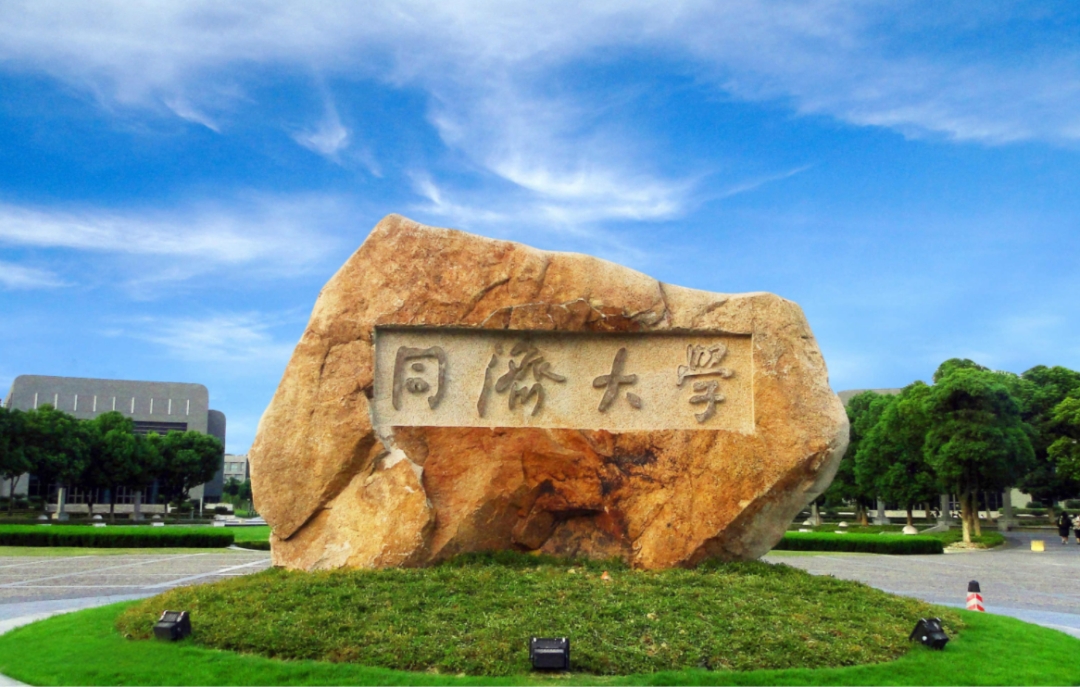
Tongji University
Its registered address is 1239 Siping Road, Yangpu District, Shanghai. It is one of the earliest national universities in China, a national key university directly under the Ministry of Education of the People's Republic of China and jointly built with Shanghai. It is listed as a national "Double First-Class" A-class university, and a key construction university under the "985 Project" and "211 Project". It has become a comprehensive, research-oriented, and international university with distinctive features and great influence at home and abroad.
The school originated from the Tongji German Medical School founded in 1907 by German doctor Erich Paulun with the support of the governments and various sectors of society of China and Germany. In 1923, it was renamed Tongji University, and in 1927, it became a national university. After the full outbreak of the War of Resistance Against Japanese Aggression in 1937, the school underwent six relocations. After relocating back to Shanghai in 1946, it developed into a comprehensive university renowned for its five major colleges: Science, Engineering, Medicine, Humanities, and Law.
During the national department and school adjustment in 1949, the school's original advantageous disciplines such as Humanities, Law, Medicine, Science, Mechanical Engineering, Electrical Engineering, Shipbuilding, and Surveying and Mapping either supported other universities or were entirely relocated to inland areas. At the same time, civil engineering and architecture-related disciplines from more than 10 universities across the country converged at Tongji, making it the engineering university with the largest scale and most complete disciplines in the field of civil engineering and architecture in China. In 1996, Shanghai Urban Construction College and Shanghai Building Materials Industry College were merged into Tongji. In 2000, it merged with Shanghai Railway University to form the new Tongji University. In 2003, Shanghai Aviation Industry School was placed under the management of Tongji University. In 2004, it was listed as a university directly administered by the central government.