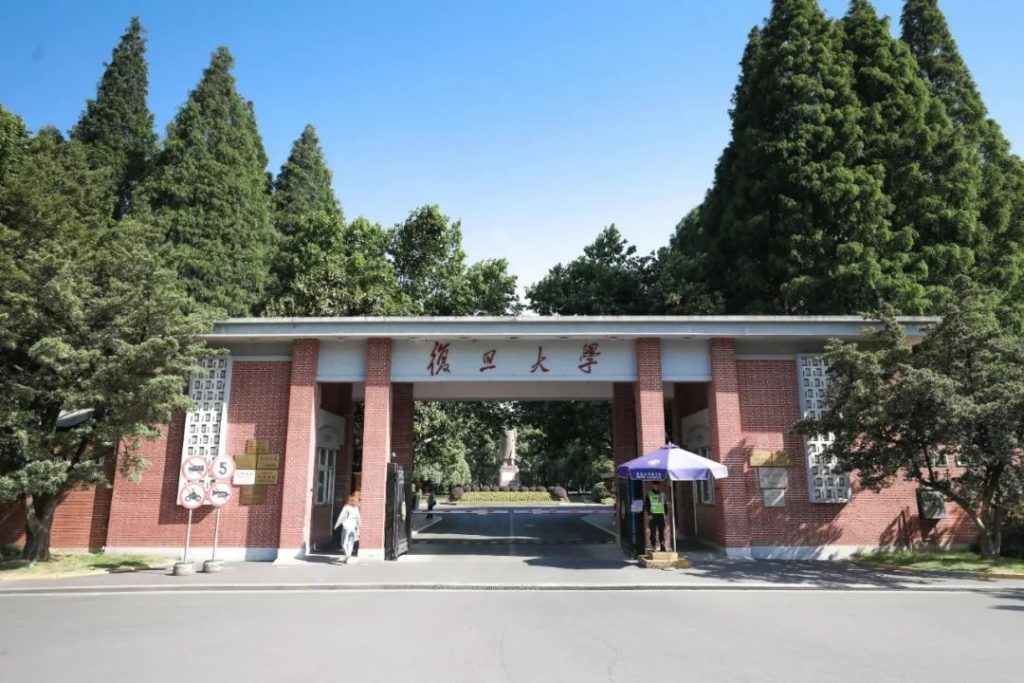
On the afternoon of November 5, the Qingshu Pavilion on the second floor of the Asian Youth Exchange Center in the North District of Handan Campus of Fudan University ushered in a special lecture for international students, with the theme of "The Belt and Road Initiative and Global Development: Hard Connectivity, Soft Connectivity and Heart Connectivity". The lecture was delivered by Jing Ming, an associate researcher at the Institute of Belt and Road and Global Governance of Fudan University, and attracted more than 110 international students from more than 30 countries and regions.
In the nearly hour-long sharing, Mr. Jing Ming systematically sorted out the grand framework of "six corridors, six roads, multiple countries and multiple ports" from the historical context of the ten-year development of the "Belt and Road", and combined with the content of the courseware, he deeply explained the multi-dimensional significance of the "Belt and Road" in geopolitics, geoeconomics, transnational infrastructure construction and international rule innovation. In particular, she took the "one single system" of China-Europe freight trains as an example to explain how multimodal transport rules can achieve institutional innovation across railways, highways and sea transport, so as to effectively reduce transaction costs and improve logistics efficiency. At the same time, she also cited the history of the construction of the Western Railroad in the United States to illustrate the profound impact of transportation infrastructure on the country's economic development, helping students from all over the world understand the "hard connectivity" logic of the "Belt and Road" initiative from a broader perspective.
When explaining the port governance part, Professor Jing started from the comparison of port models in France, Germany, Japan, the United States and other countries, and analyzed how the balance between public and private law affects port operation efficiency and national governance capabilities. She also revealed the strategic position of ports in the global shipping system and the important role of international rules in crisis management through cases such as the rebirth of the port of Piraeus and the impact of the "Long Gift" incident, which triggered students to further think about the global governance structure.
Many international students also shared their gains and insights after the lecture. German Mariia, a doctoral student at the School of International Relations and Public Affairs from Russia, said that the lecture was very rich, not only with a theoretical framework introduction, but also with a large number of real cases from overseas infrastructure projects, giving her a clearer understanding of how multinational enterprises carry out project implementation, logistics planning and cost considerations in the construction of the "Belt and Road". She said: "Through this lecture, I have a more three-dimensional understanding of the 'Belt and Road' initiative, and I can better appreciate China's efforts in promoting global connectivity and win-win cooperation. ”
Kuan Jue Clarence Tan, an undergraduate student in the Department of Chinese Language and Literature from Singapore, said: "Today's lecture gave me a deeper understanding of the Belt and Road Initiative. As an international student interested in regional development, I believe that the Belt and Road Initiative plays a key role in achieving regional and global development. Through Mr. Jing's insight into the contemporary geopolitical landscape and the sharing of his own experience, I realized the importance of coordinated development and joint promotion of common development of mankind in the era of globalization from a macro level. Also touched was Haniye Ghorbani, a doctoral student in the Department of Tourism from Iran. She mentioned that the framework from "hard connectivity, soft connectivity to heart connectivity" has greatly helped her understand the global significance of the "Belt and Road". "Mr. Jing's vivid and profound sharing of his work experience at the United Nations made me realize that the Belt and Road Initiative is not only infrastructure construction, but also a link of mutual understanding and walking hand in hand between different cultures. As international students from different countries, we are witnesses of 'heart connection'. She said that this lecture made her think more about global governance and international cooperation, and also enhanced her expectations for continuing to cultivate related fields in the future.
Annie Hong Sui, an undergraduate student at the School of Journalism from the United States, has a unique understanding of the content of the lecture from the perspective of communication. She mentioned that through her understanding of the layout of "six corridors and six roads" and the innovation of the China-Europe freight train system, she has a deeper understanding of the key role of transportation interconnection in promoting international economic, trade and cultural exchanges. "In particular, the teacher's reference to the example of the American Western Railroad made me realize how infrastructure affects a country's economic and social development. The Belt and Road Initiative is not only economic cooperation, but also an important hub for promoting the interconnection of the world. She said the lecture provided valuable inspiration for her future studies and practices related to international reporting. This lecture not only gave international students a deeper understanding of the macro framework and rule innovation of the "Belt and Road", but also allowed them to truly feel the practical significance of "heart connection" in the context of cross-cultural exchanges.
As the Belt and Road Initiative enters its second decade, such a high-quality lecture undoubtedly provides international students from all over the world with a valuable opportunity to understand the world and participate in global governance, and also allows them to witness the pulse of the times of global connectivity on the Fudan campus.
Fudan University
Located in Shanghai, it is a comprehensive and research-oriented national key university directly under the Ministry of Education of the People's Republic of China and jointly built with Shanghai. It has been selected as the Everest Plan, the Strong Foundation Plan, the 101 Plan, the 111 Plan, the 2011 Plan, the Talent Program, the Outstanding Doctor Education and Training Program, the Outstanding Legal Talent Education and Training Program, the National Construction High-level University Public Graduate Program, the Chinese Government Scholarship for International Students in China, the Demonstration University for Deepening the Reform of Innovation and Entrepreneurship Education, and the Degree Authorization Independent Review Unit. He is a member of the Nine Universities Alliance, the Pacific Rim University Alliance, the Global University Advanced Research Institute Alliance, the China University Presidents Association, the East Asian Research University Association, the Medical "Double First-Class" Construction Alliance, the Yangtze River Delta Research University Alliance, the Yangtze River Delta University Think Tank Alliance, and the Sino-Russian Comprehensive University Alliance.
The name of the school is taken from the "Sun and Moon Shine, Dan and Dan" in the "Shangshu Da Zhuan". Founded in 1905, formerly known as Fudan Public School, it was named Fudan University in 1917, and was the first institution of higher learning independently founded by Chinese. Shanghai Medical University was formerly known as the School of Medicine of the Fourth National Sun Yat-sen University, founded in 1927. In 2000, Fudan University and Shanghai Medical University merged to form the new Fudan University.