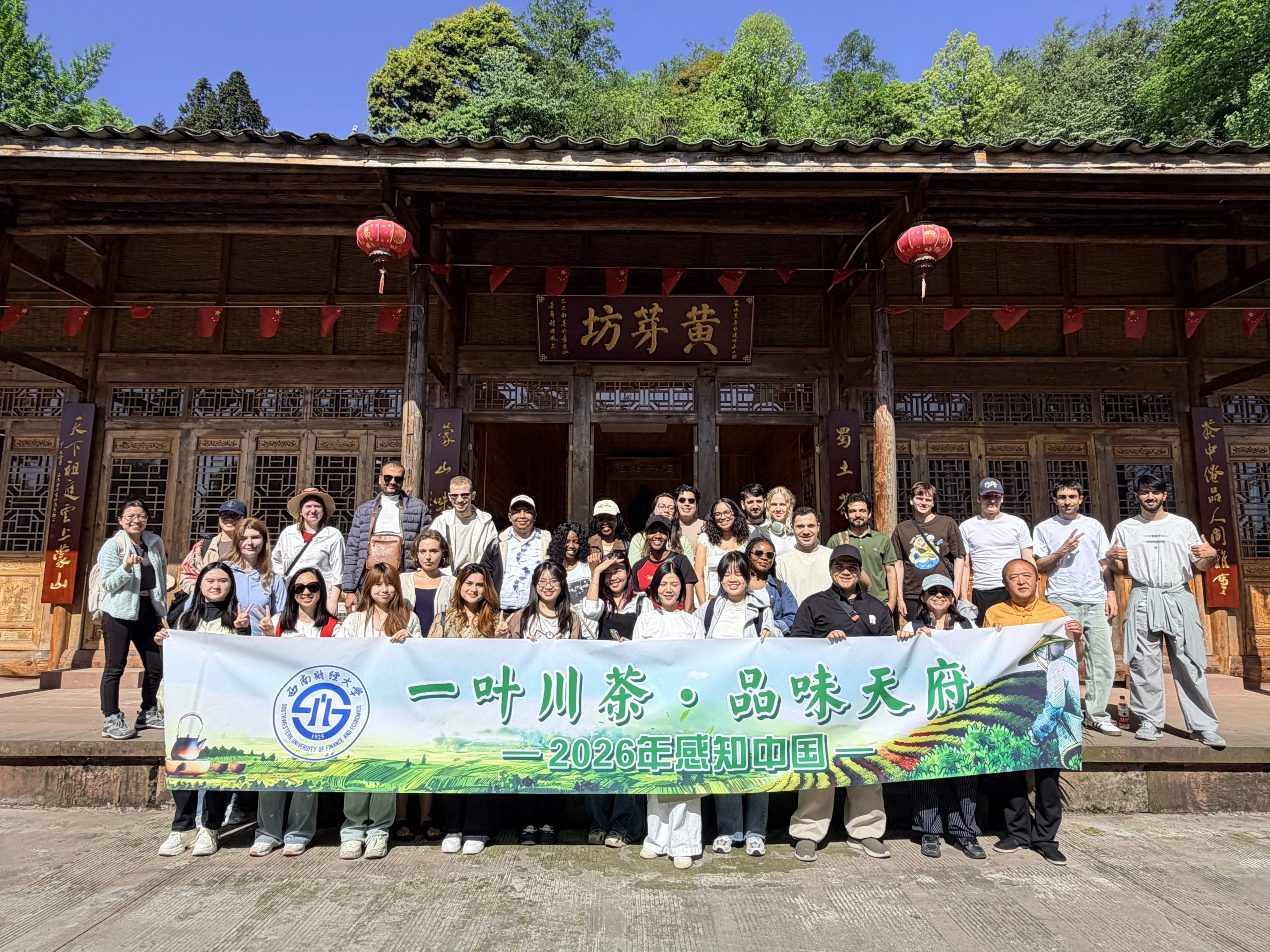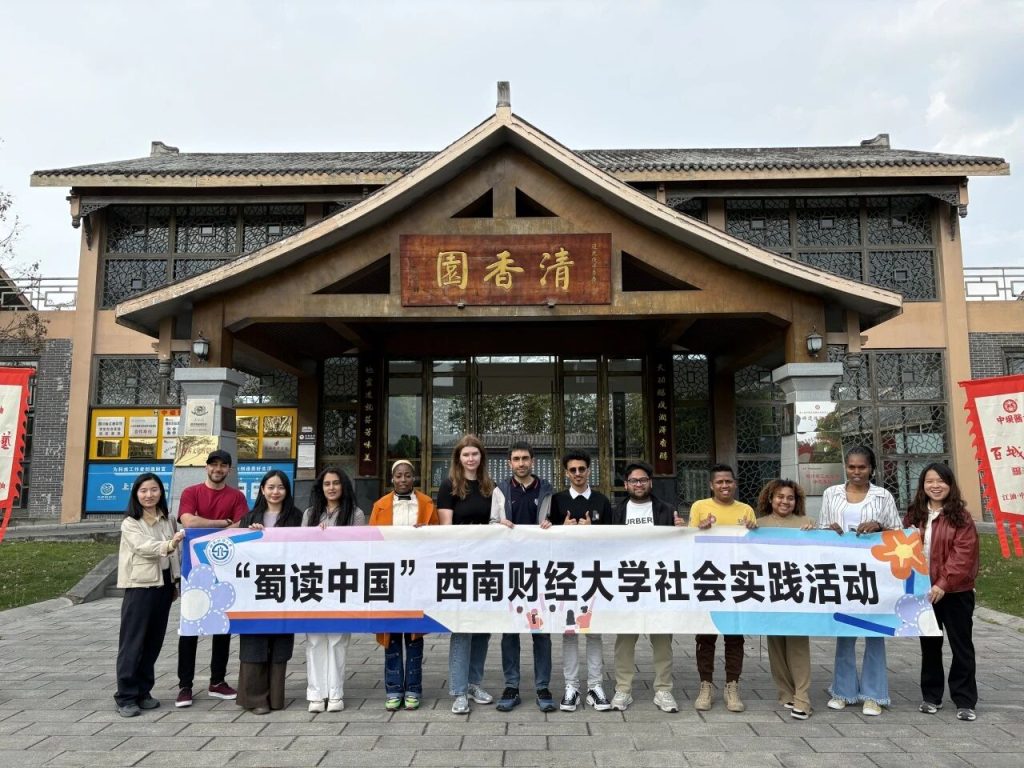
From April 1 to 2, 2026, the College of International Education at Southwest University of Finance and Economics (SWUFE) organized a “Reading China in Sichuan” social practice activity for 12 international students. By visiting the China Soy Sauce Culture Museum and the Hometown of Li Bai in Jiangyou, students “read” the essence of China through an immersive journey.
Day 1: Discovering Intangible Cultural Heritage – The Art of Soy Sauce Brewing
The group first arrived at the China Soy Sauce Culture Museum in Jiangyou, Mianyang. Under the guidance of experts, students explored the origins and evolution of Chinese sauce culture. They observed the traditional brewing process—from selecting beans and koji making to fermentation and sun-drying—each step embodying the wisdom of ancient craftsmen.
The highlight of the day was the hands-on soy sauce tapping experience. International students were thrilled to personally tap fresh soy sauce from massive traditional vats. Many students noted that this was their first close-up encounter with Chinese intangible cultural heritage, describing the museum not just as a culinary journey, but as a living classroom of cultural preservation.
Day 2: Immersing in the World of the “Poet Immortal” Li Bai
On the second day, the team traveled to Qinglian Town for an immersive experience of Li Bai’s culture. At the Li Bai Museum and the Taibai Memorial Stone Forest, students learned about the legendary life of the Tang Dynasty poet through scene recreations, poetry recitals, and stone inscription appreciation.
At the Li Bai Memorial Hall, students went beyond observation by participating in a traditional bookbinding workshop. They hand-bound notebooks for the Li Bai Academy, experiencing the meticulous craft of ancient Chinese bookmaking. To conclude the trip, the students collectively recited Li Bai’s classic poems, using their voices to bridge the gap between modern international youth and ancient Chinese literature.
This “Reading China” initiative successfully integrated heritage education with classical poetry. SWUFE will continue to organize such cultural practices, empowering international students to become “Ambassadors of Friendship” for China-foreign cultural exchange.